Master thesis
From Trester to Treasure
An explorative material development using grape pomace


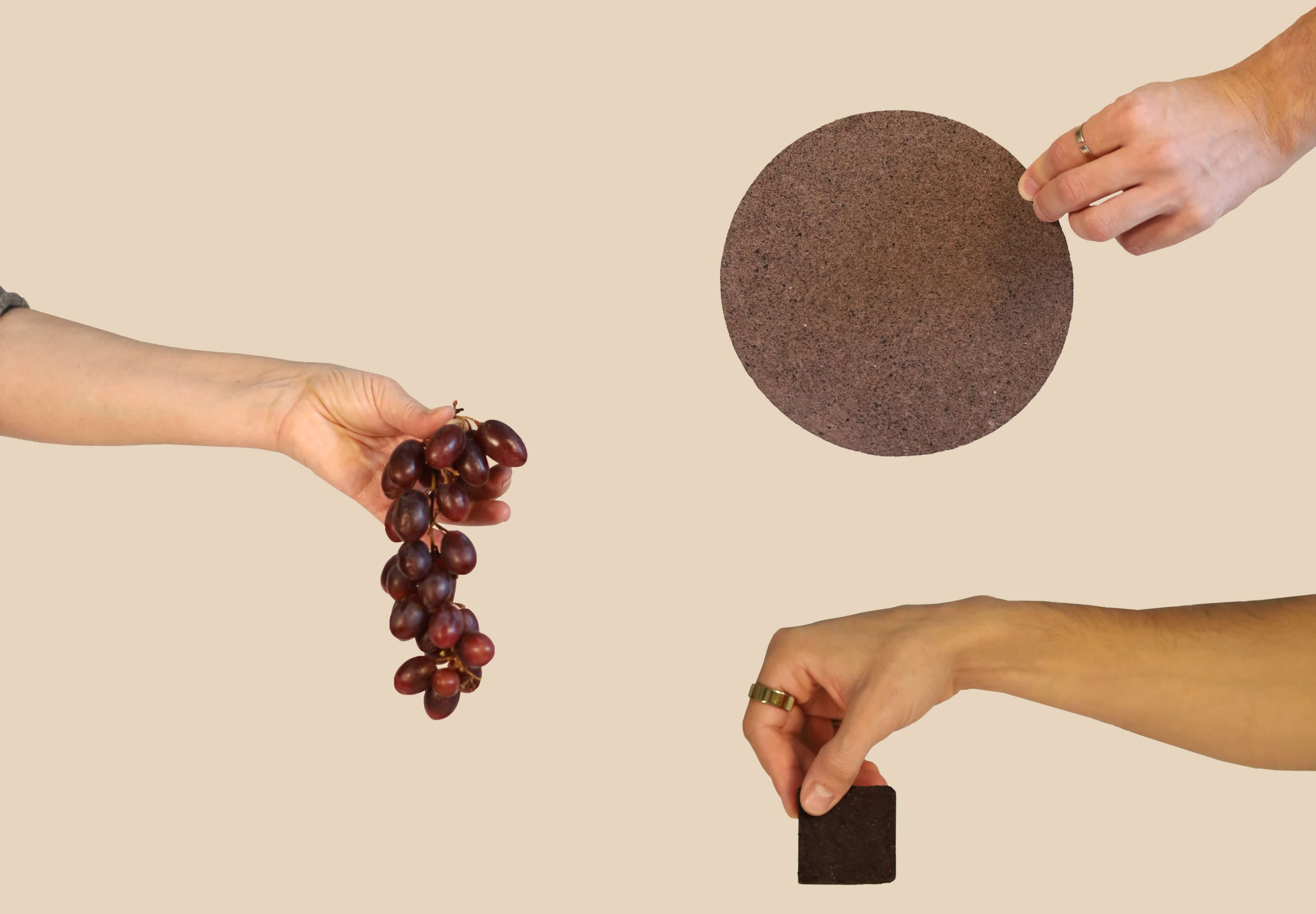
Every year, large quantities of grape pomace are produced during winemaking, a side-stream material made up of skins, seeds and stems. This residual material is still only used to a limited extent, while rising production costs and wine prices increase the economic pressure on winegrowers. The search for alternative, value-adding uses is therefore becoming increasingly relevant and offers not only a solution for wineries but also a response to broader resource scarcity.
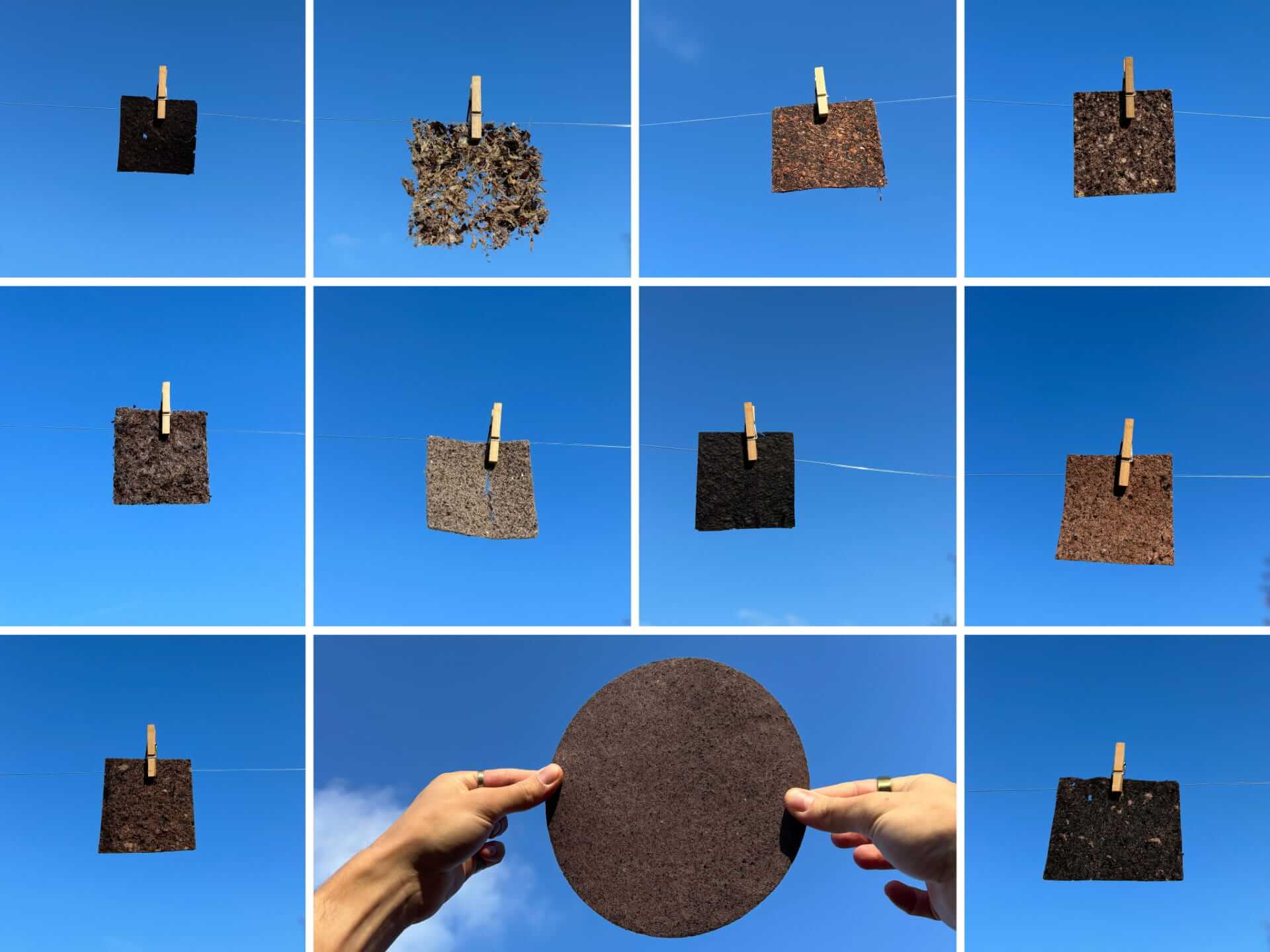
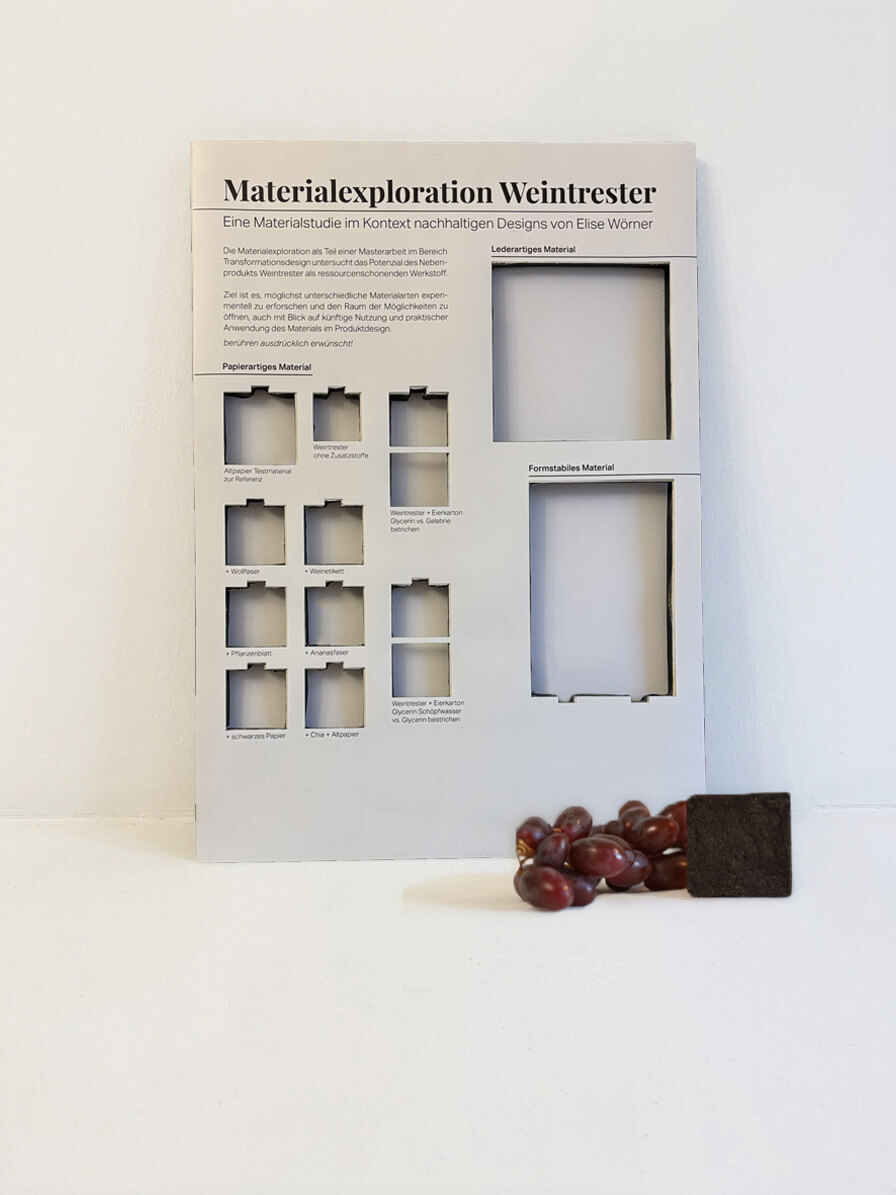
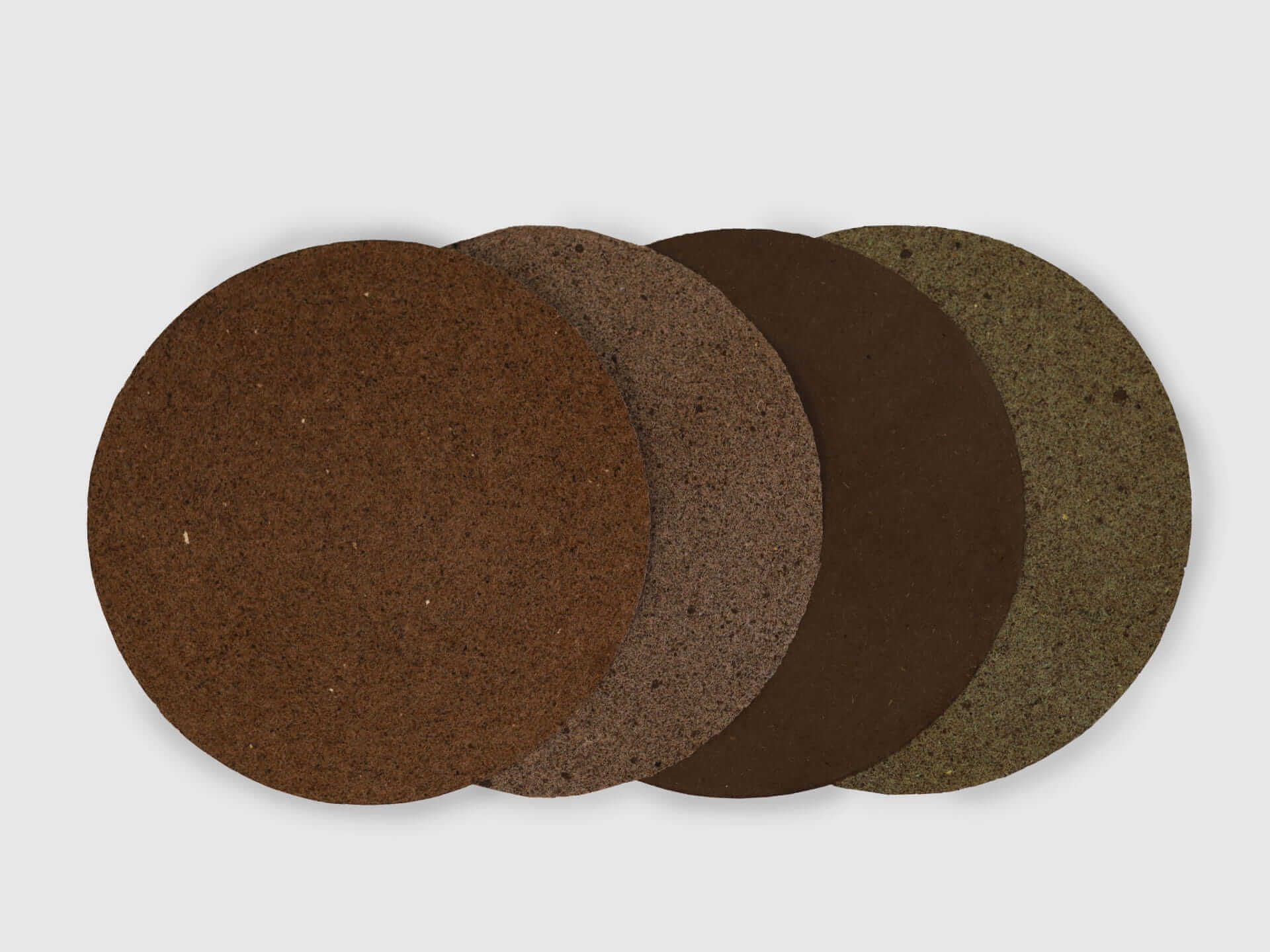
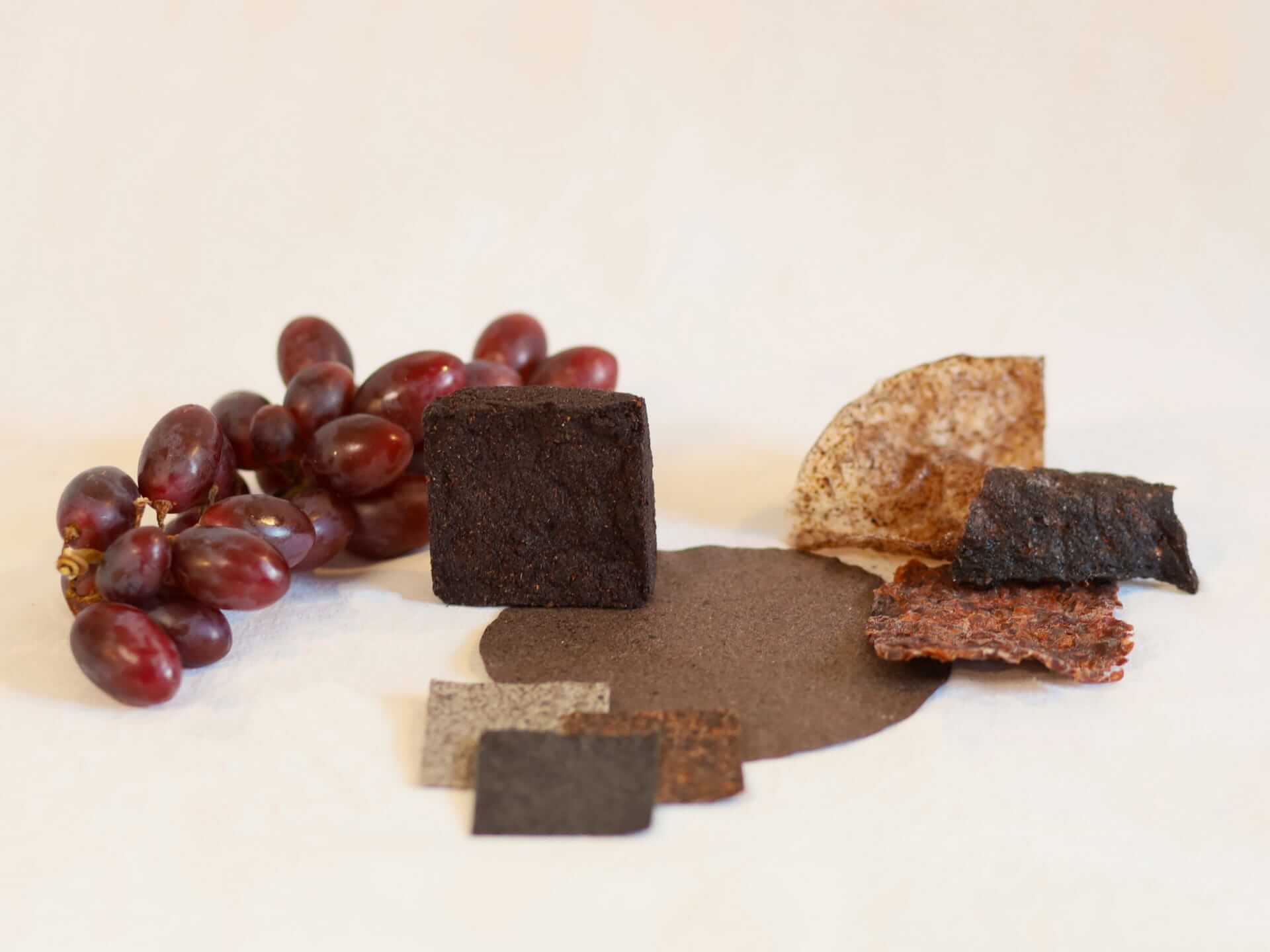
This master thesis investigates the material and design potential of grape pomace as the starting point for an experimental material development. The aim is not only to process the residual material technically, but to explore it as an independent material with specific properties and sensory qualities. Through iterative series of experiments, different recipes and additives were tested and developed into rigid, leather-like and paper-like material prototypes, with a particular focus on paper-based applications.
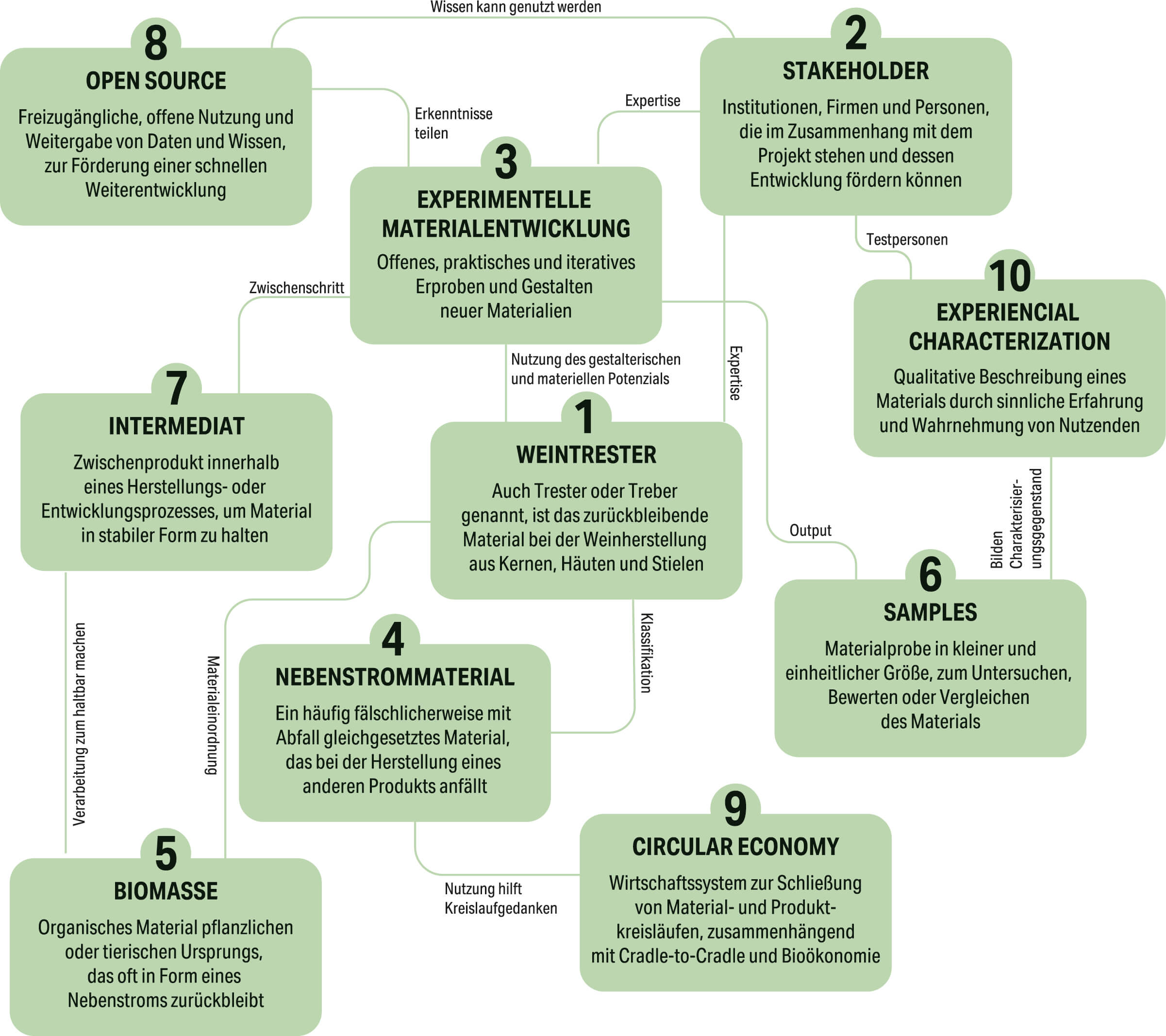
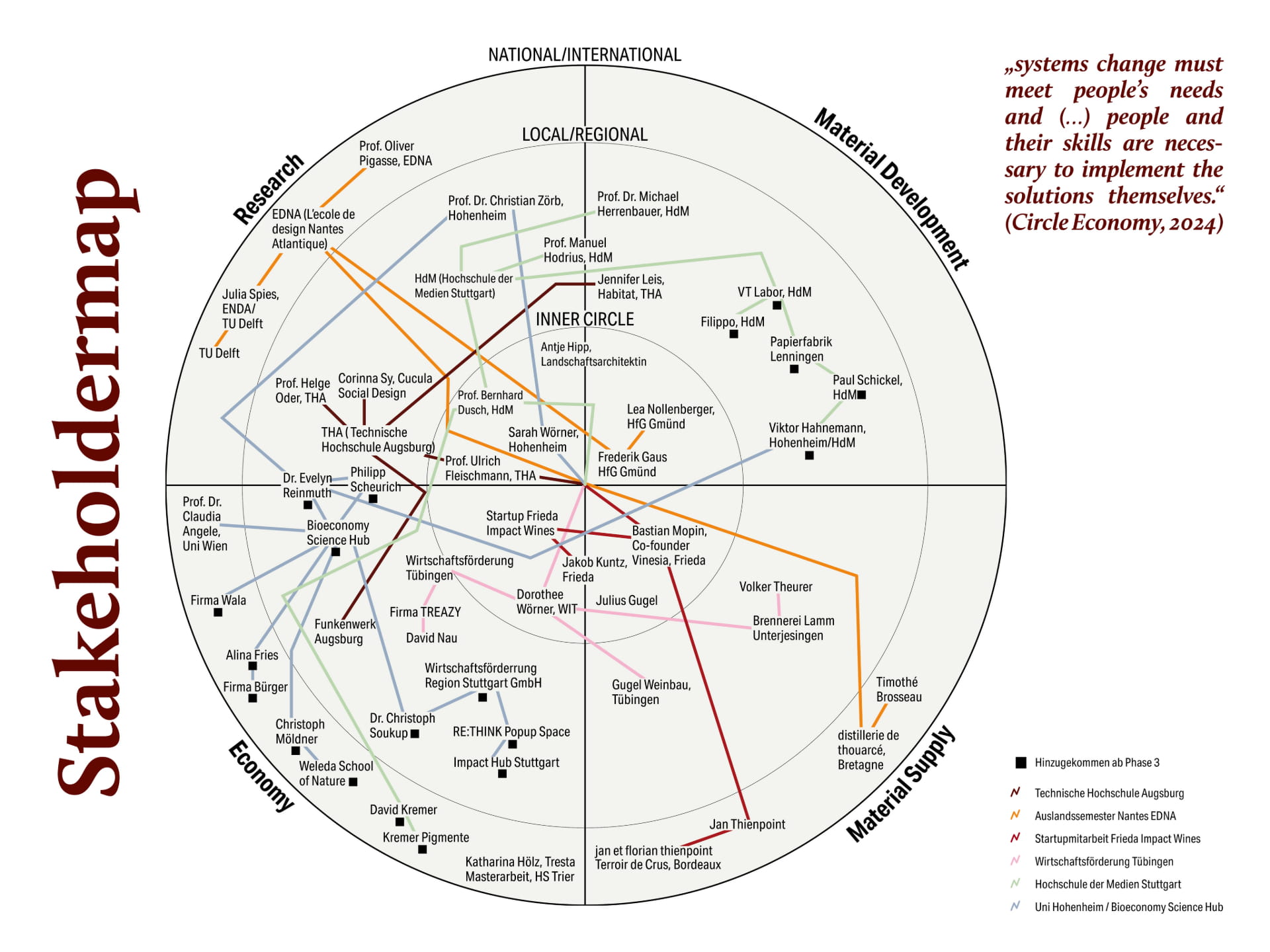
The development process is closely connected with stakeholders from viticulture, research and practice. Through this exchange, the material is embedded directly into existing structures and its future potential is considered from the start. The project also sees itself as a contribution to open, collaborative material research. Results and insights are designed so they can be further developed, adapted and used in the spirit of open source.
The work demonstrates how design research can reframe biomass and how design can help transform an underestimated residual material into a sustainable material with its own distinct character.
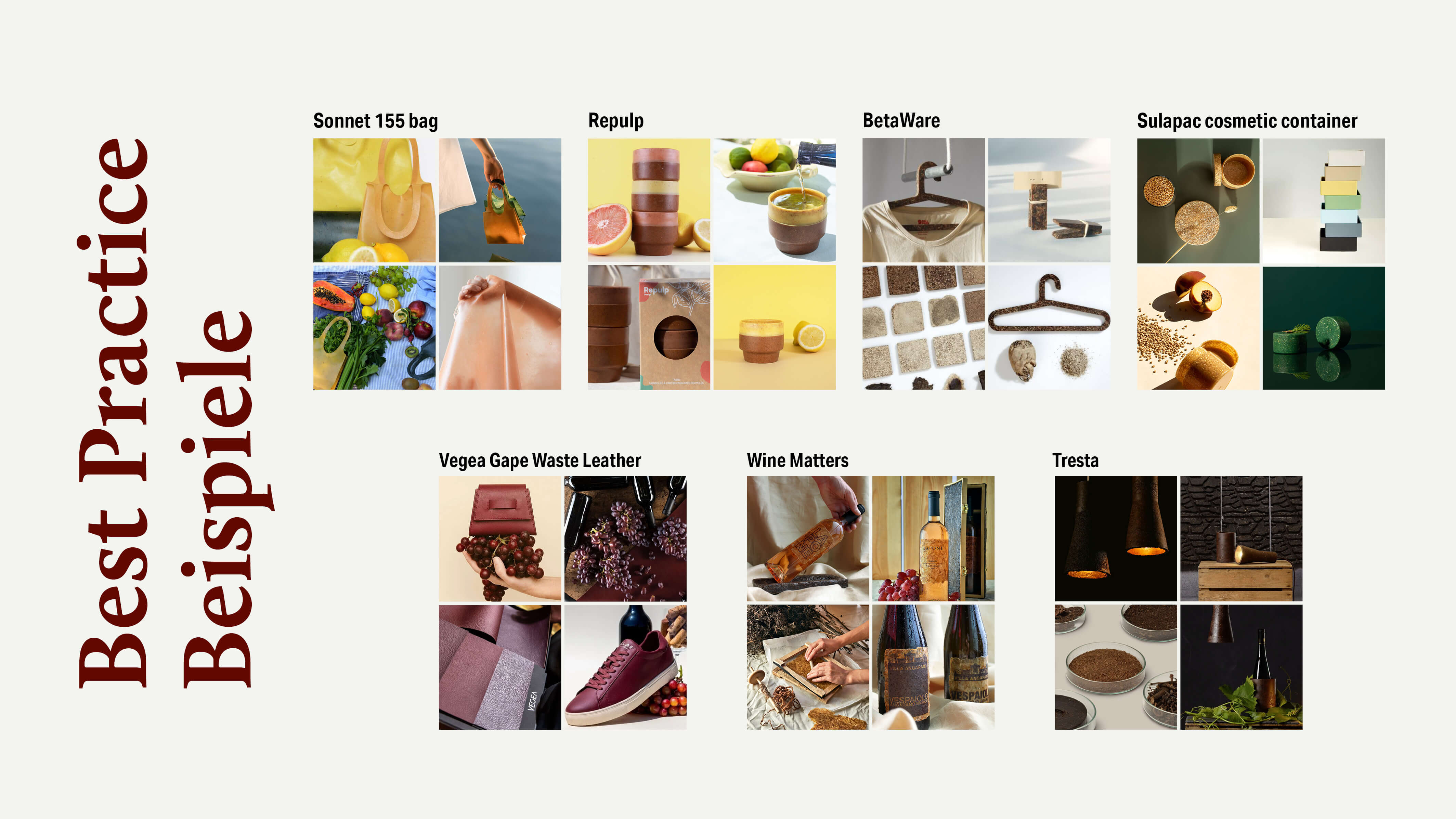
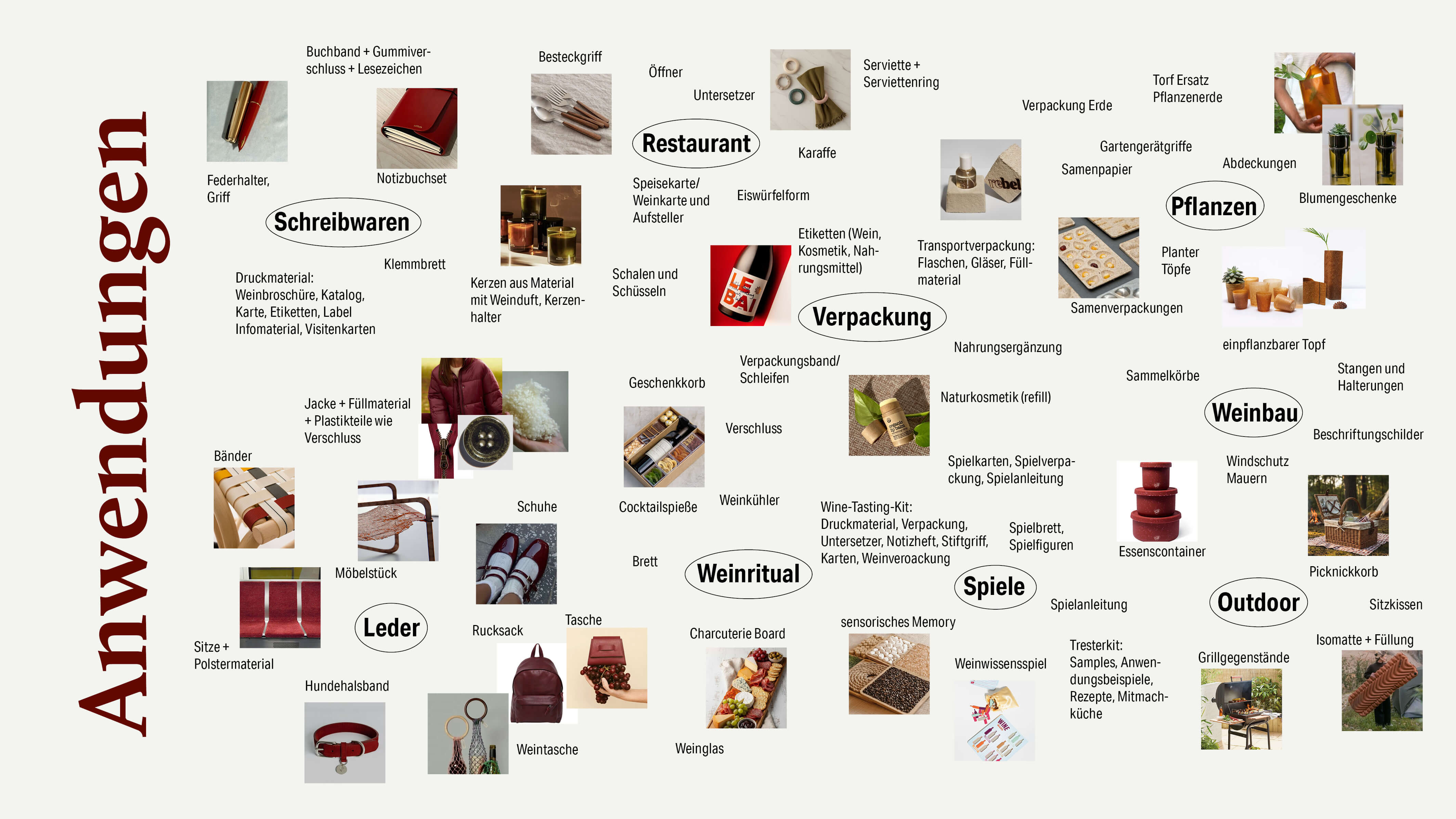
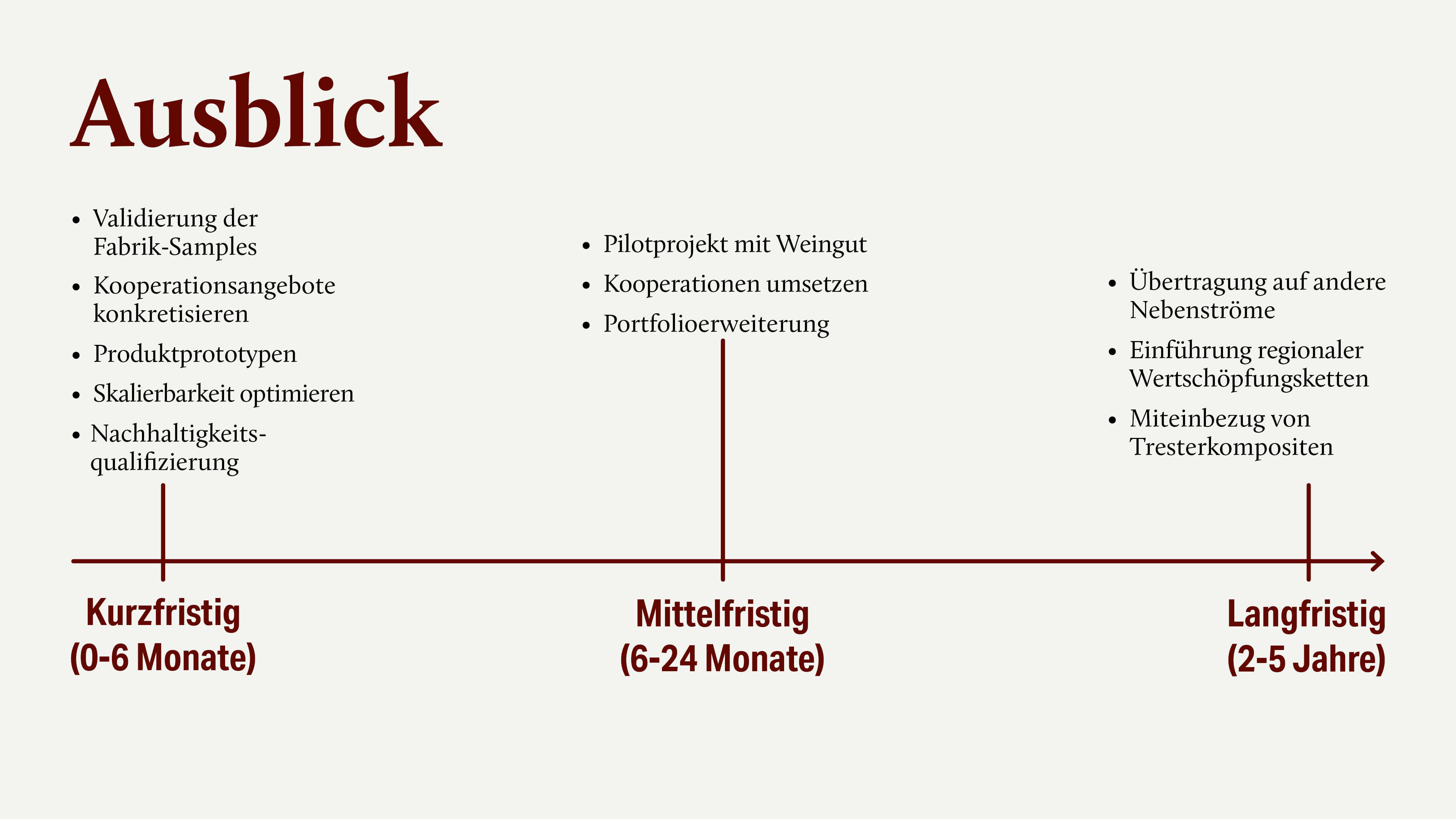
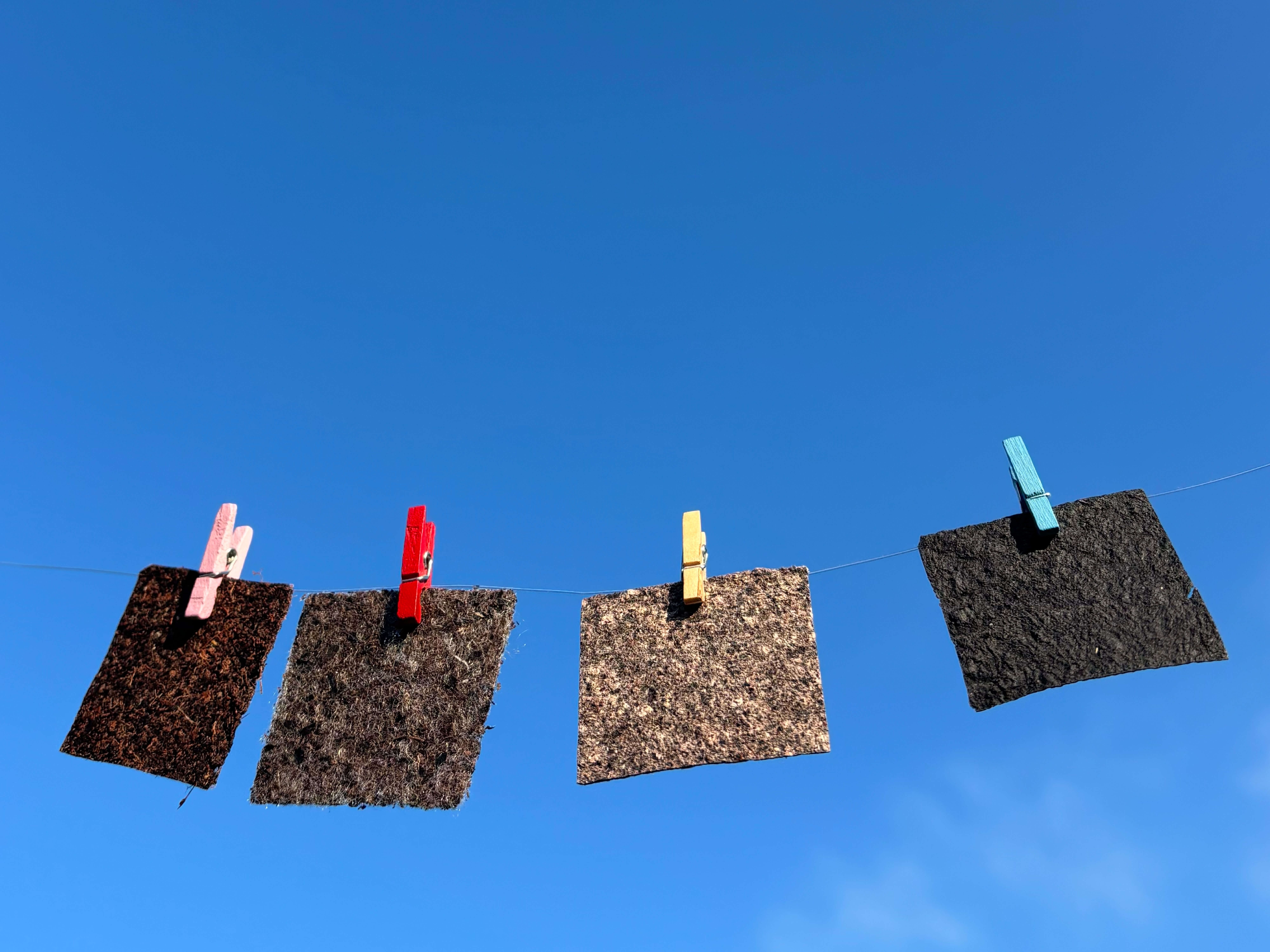
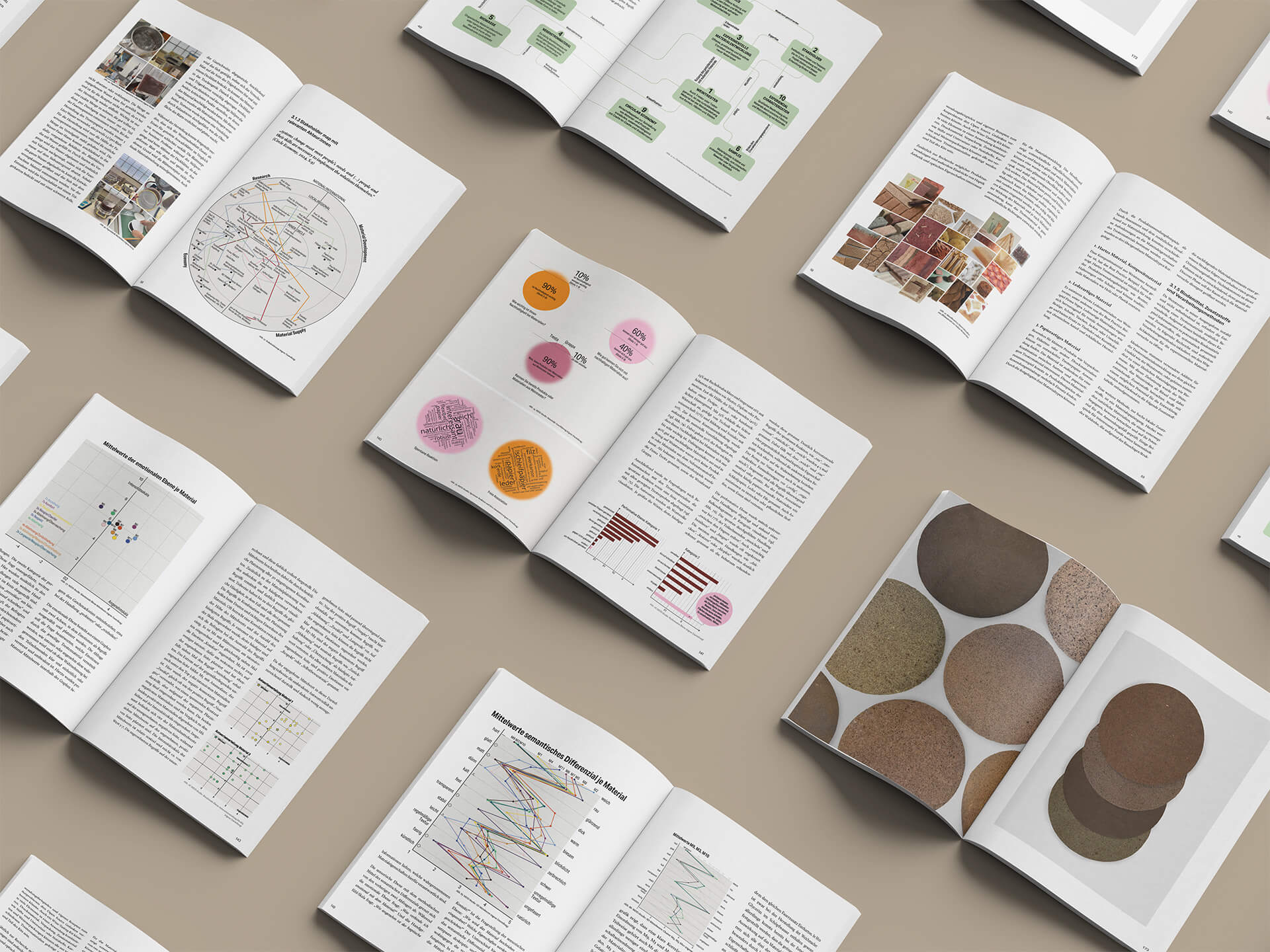
Divided into three experimental series, different pomace materials were tested for a range of application areas. Based on a catalogue of requirements, a decision was then made regarding which series offered the greatest potential for the final pomace material. The paper material was selected because of its uniqueness on the market, its high pomace content of at least 80 percent and its diverse potential applications.
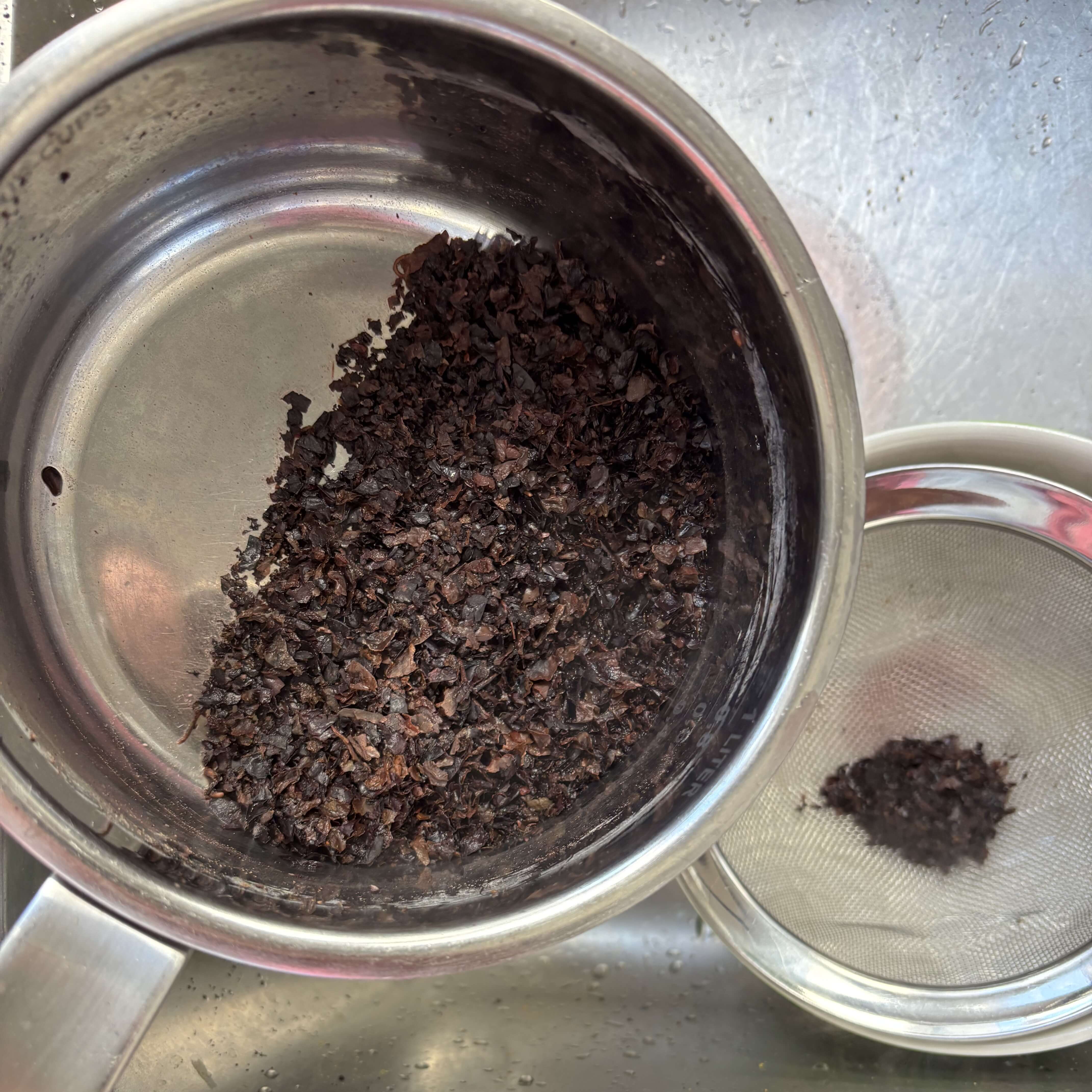
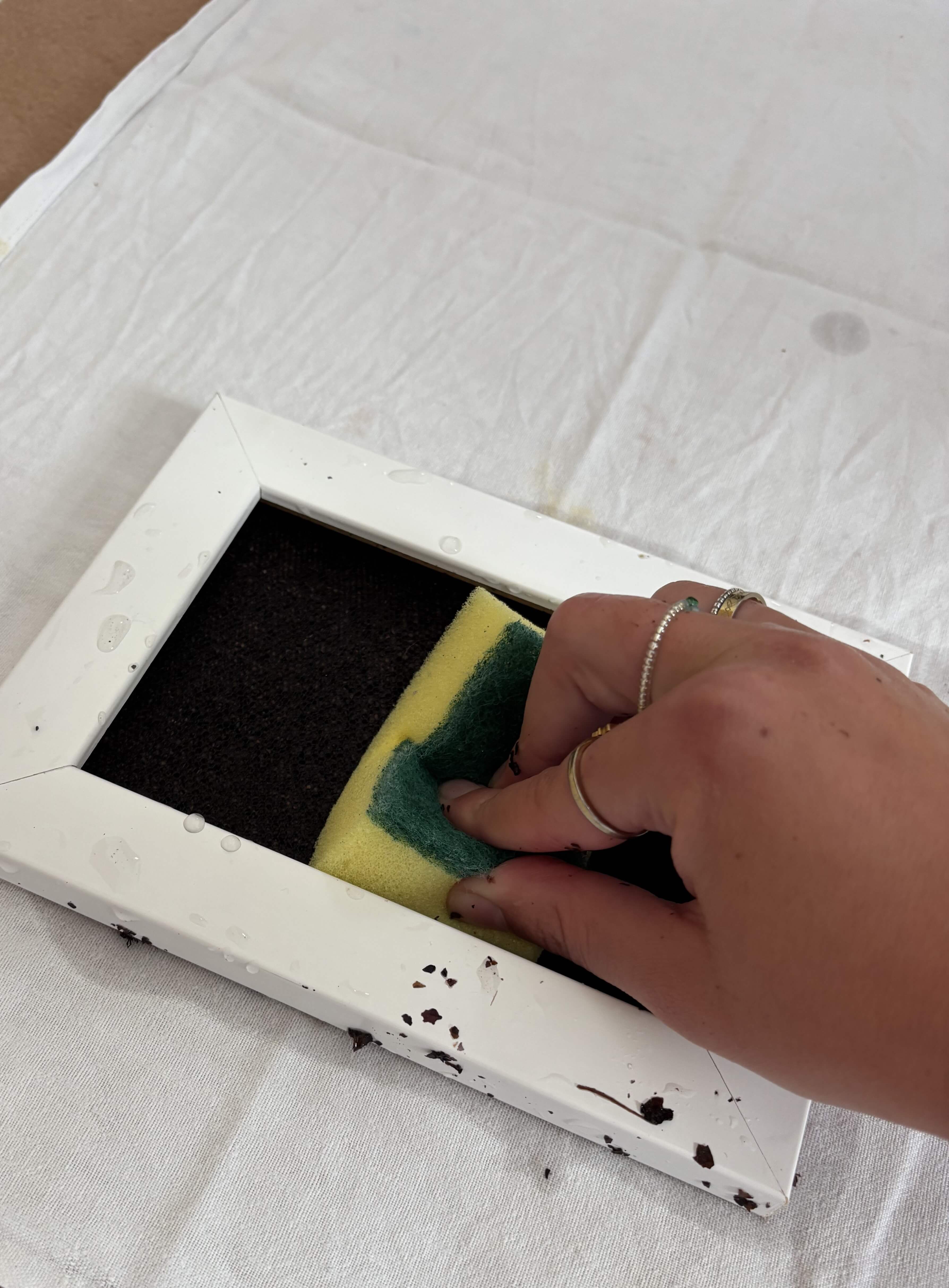
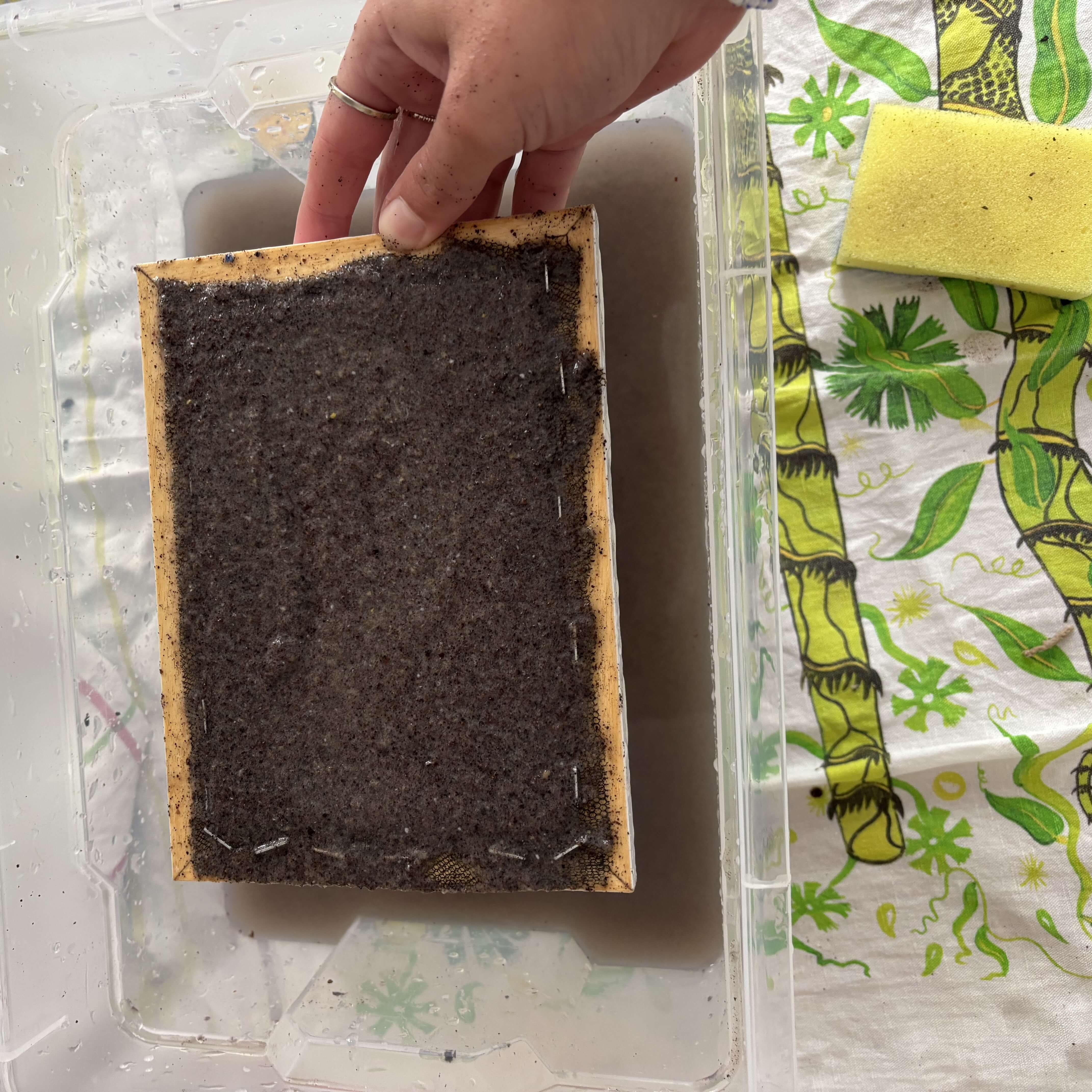
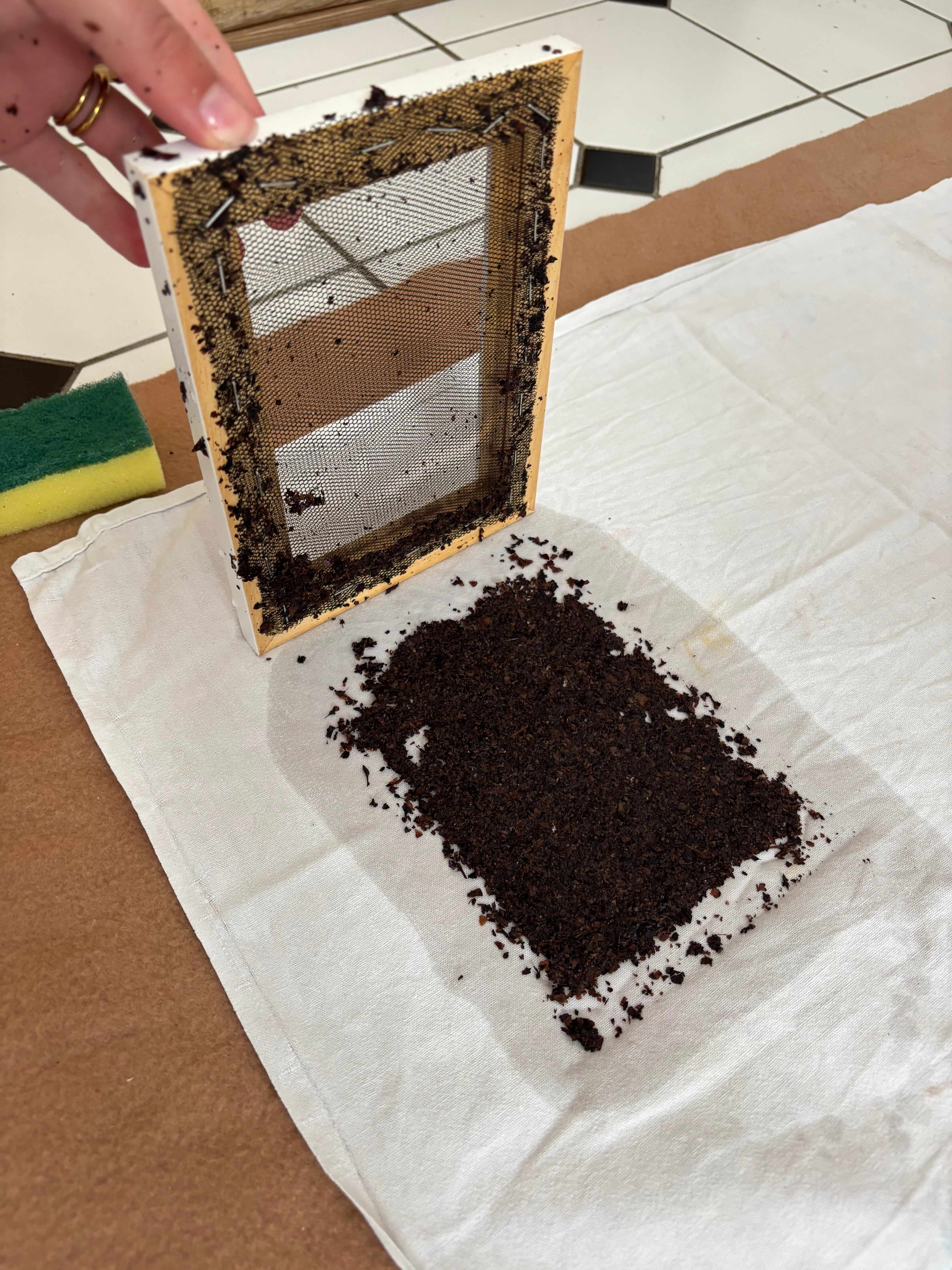
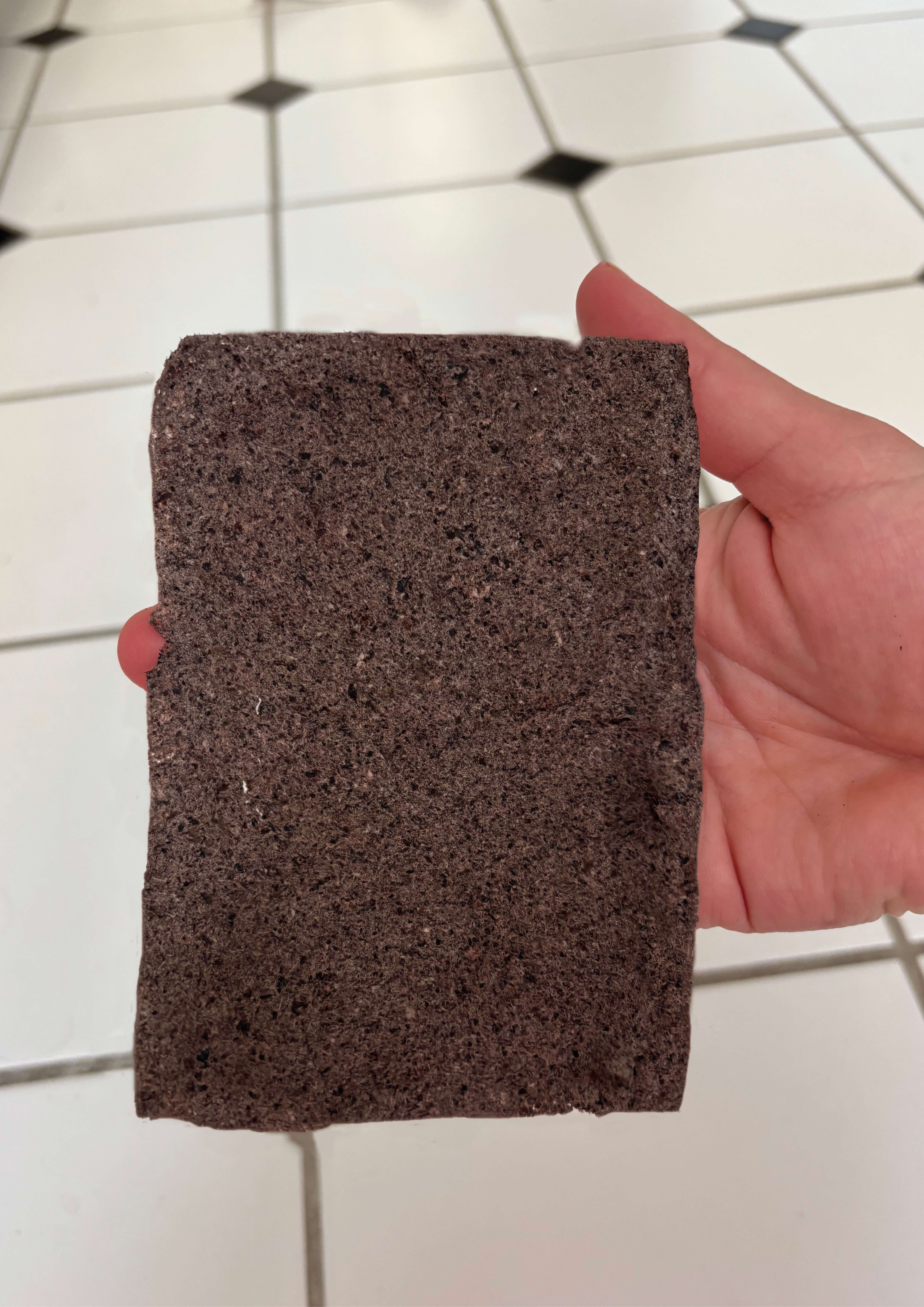
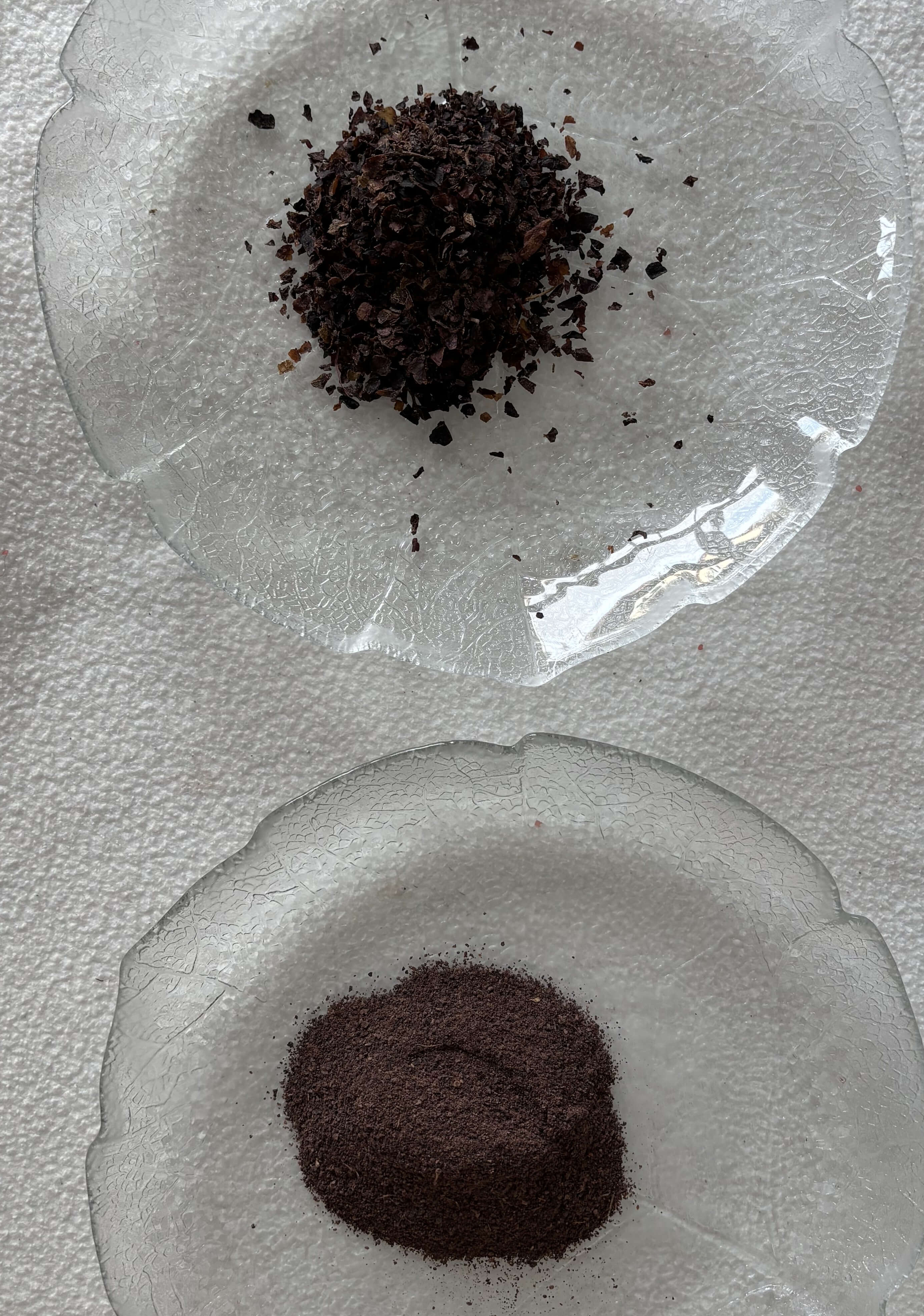
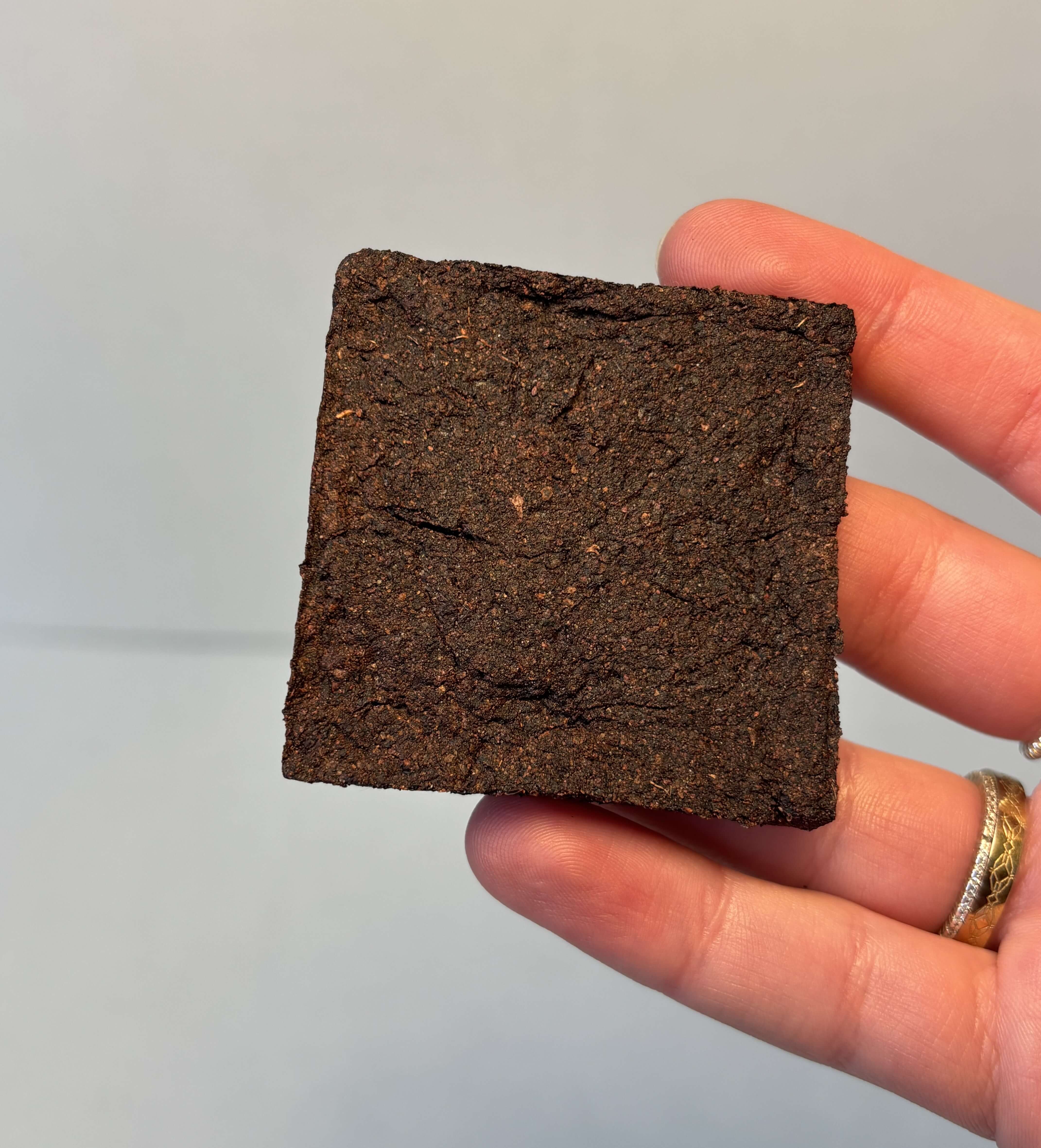
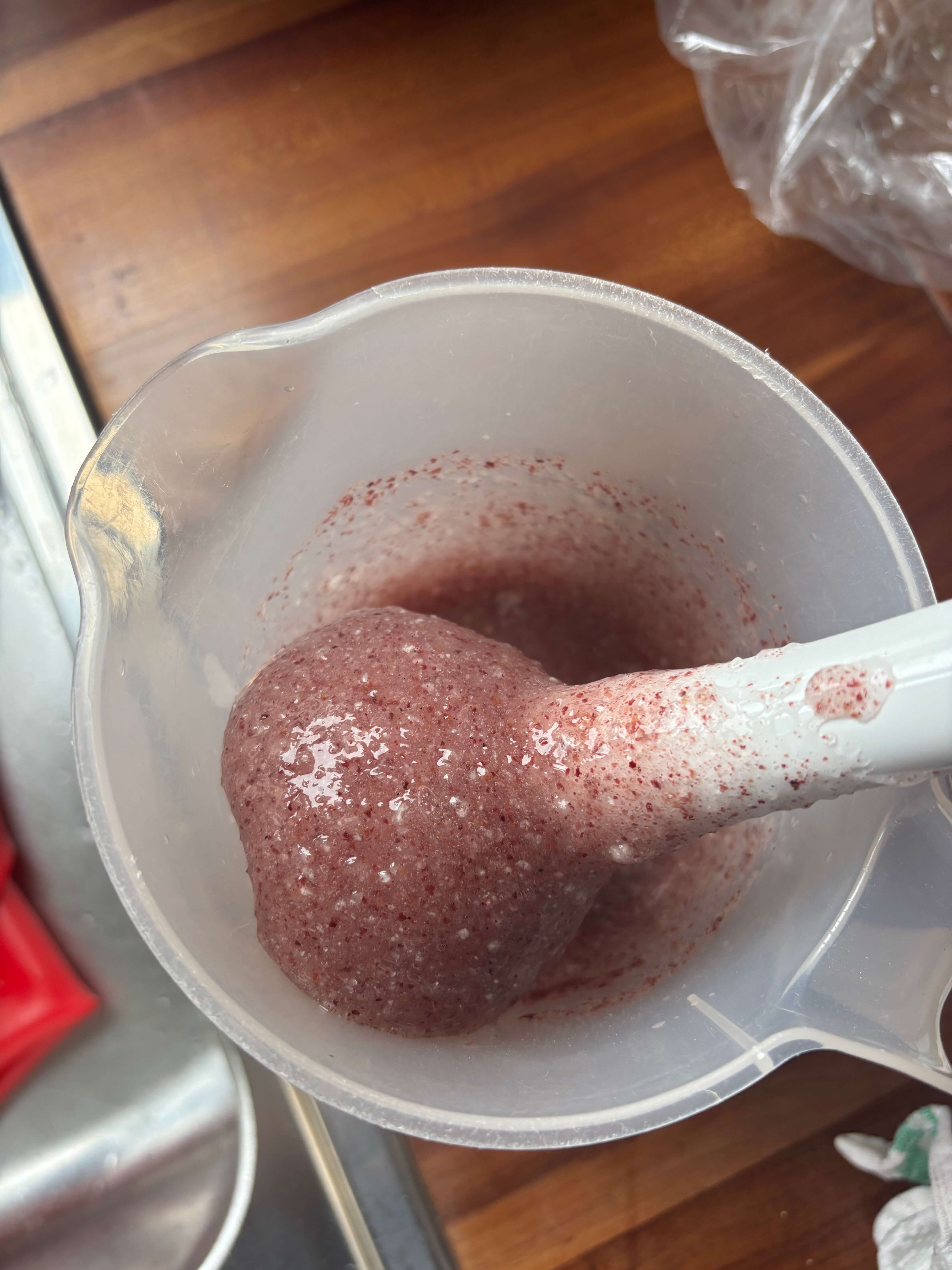
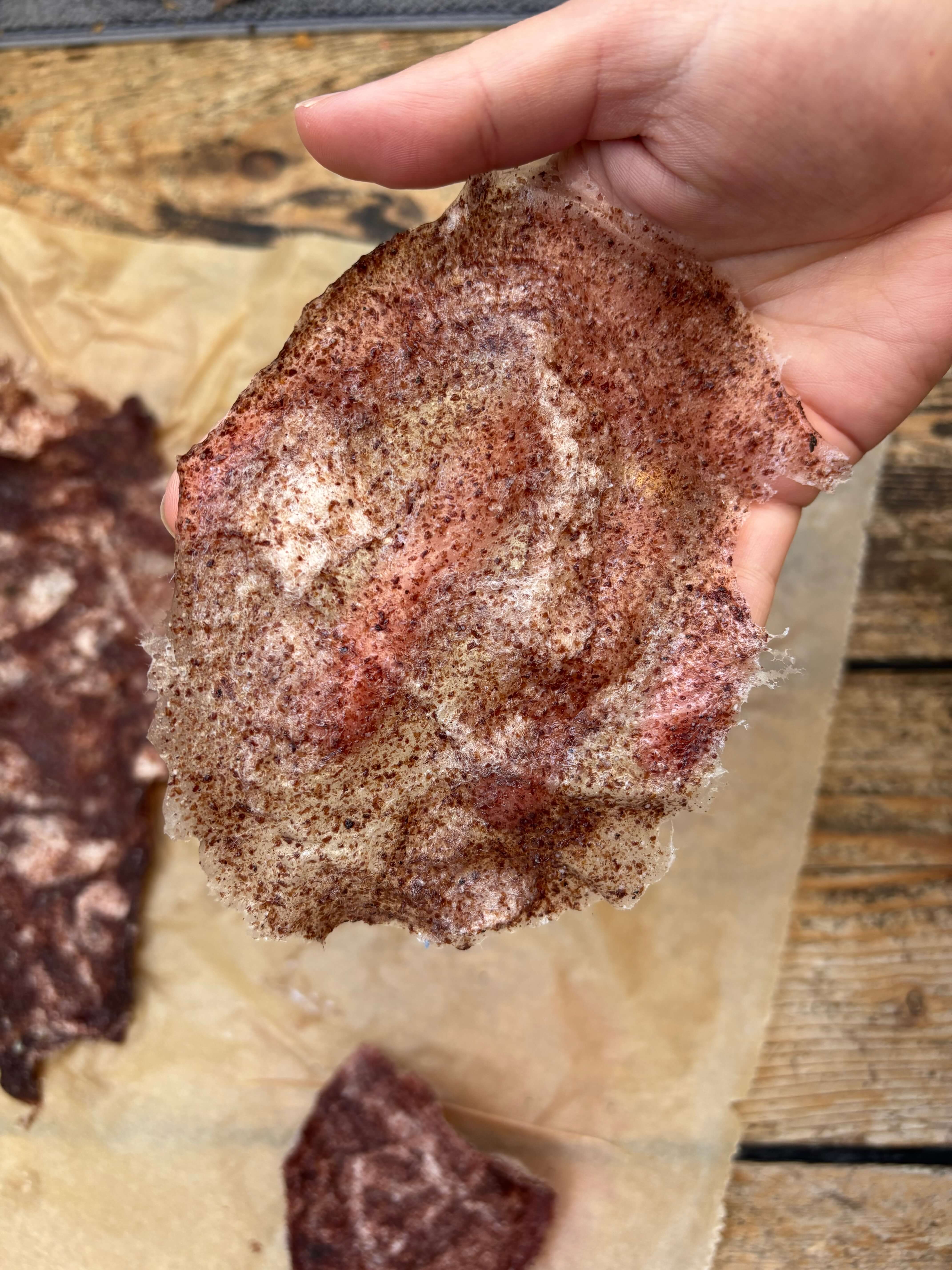
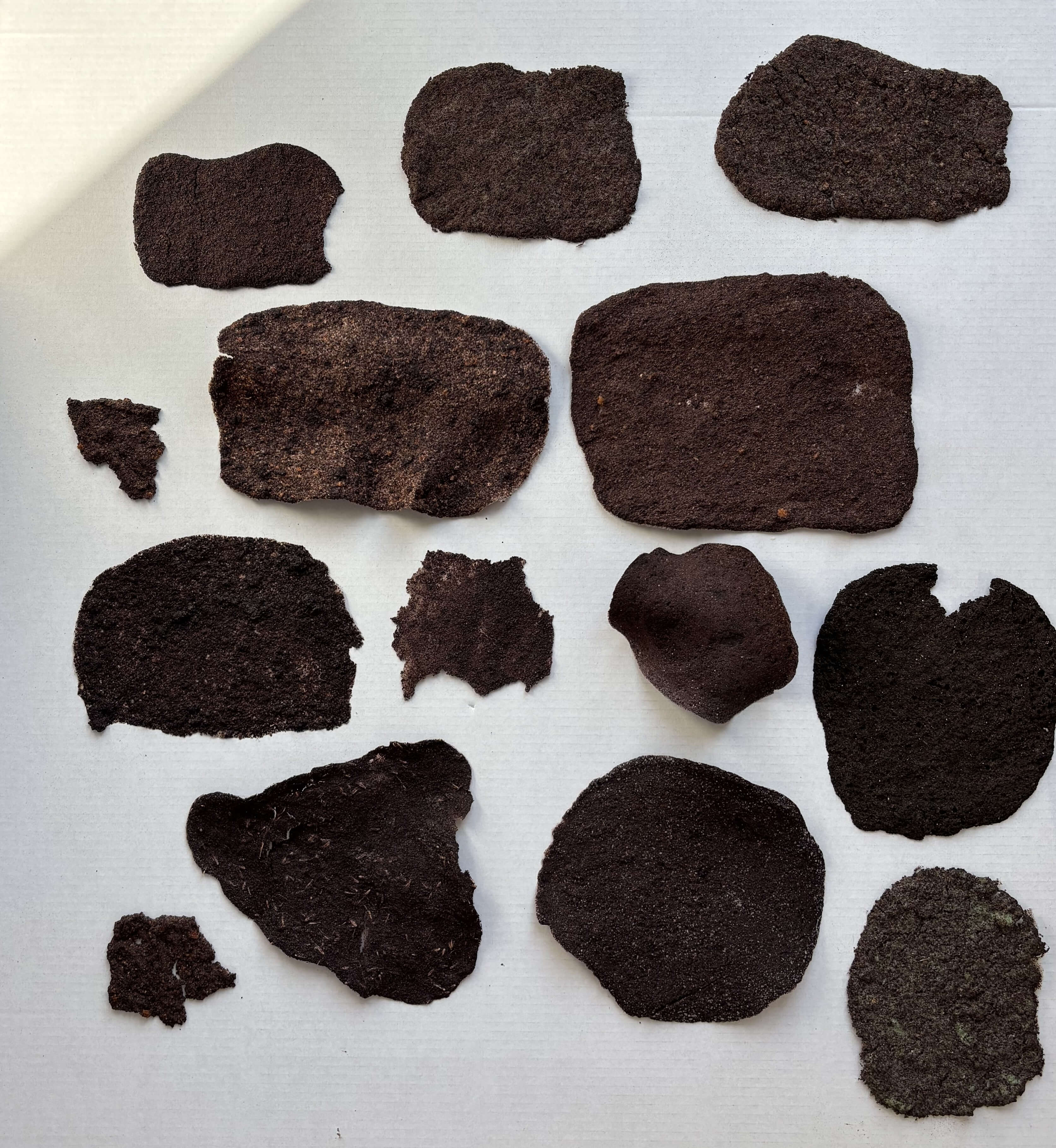
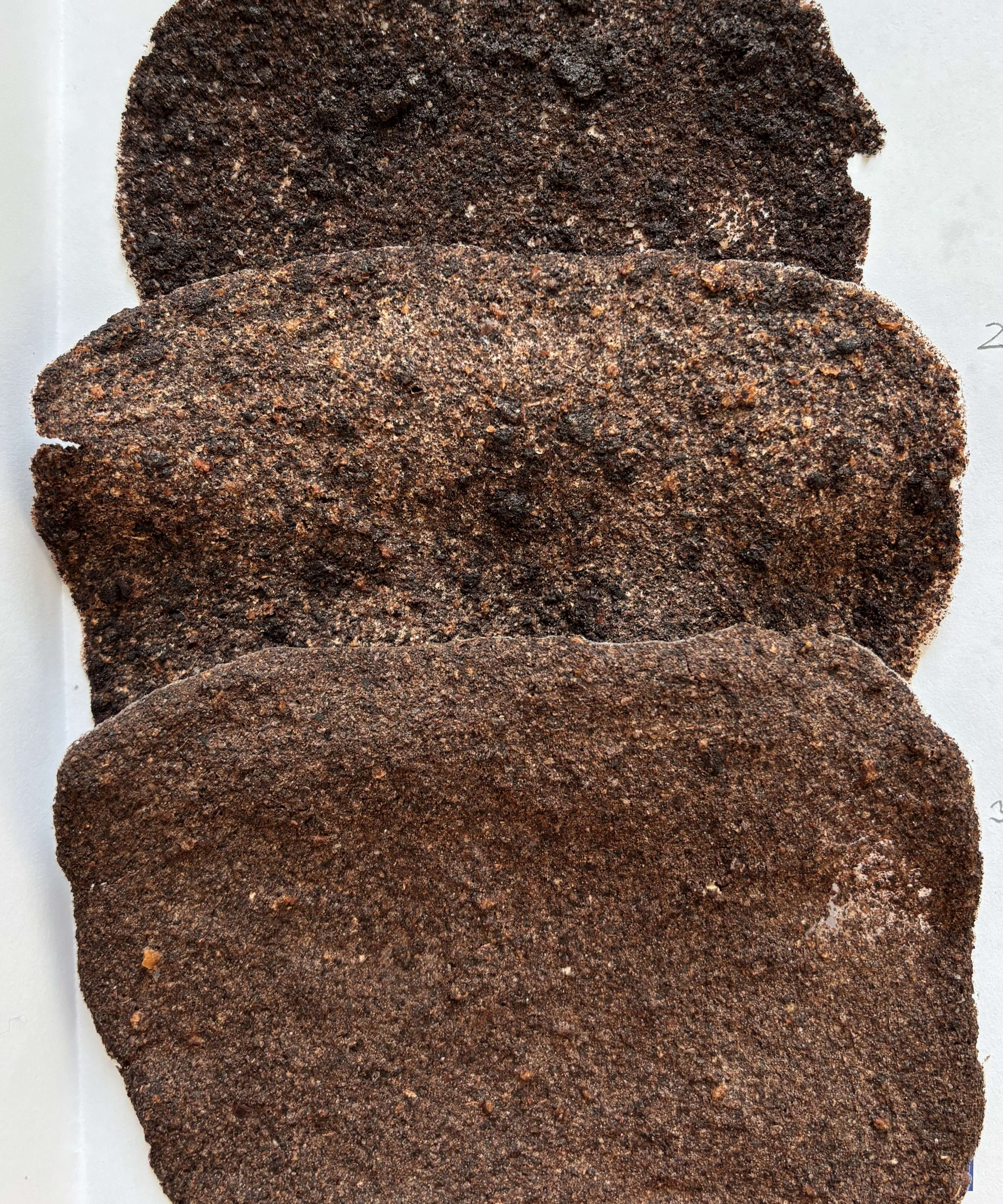
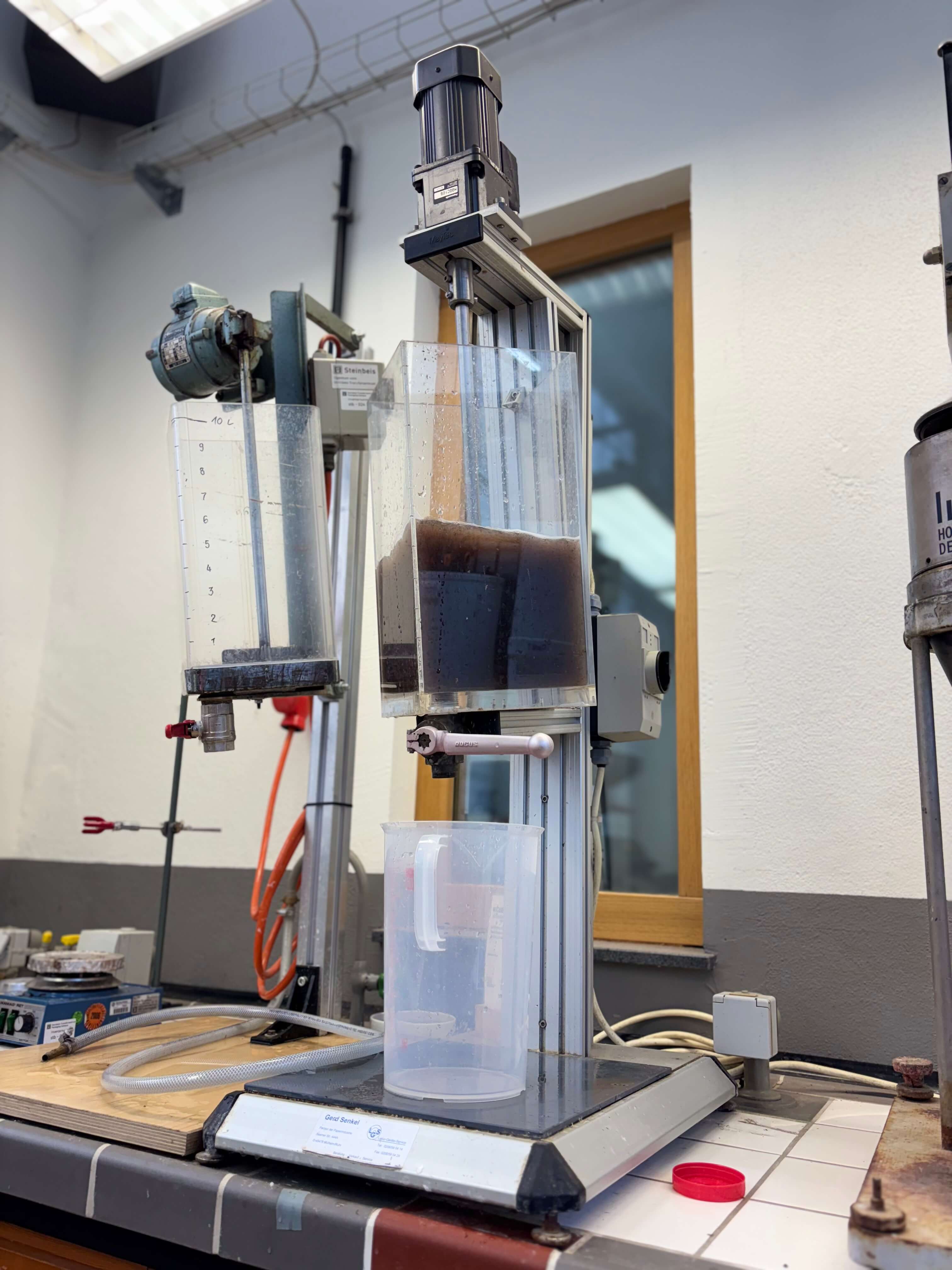
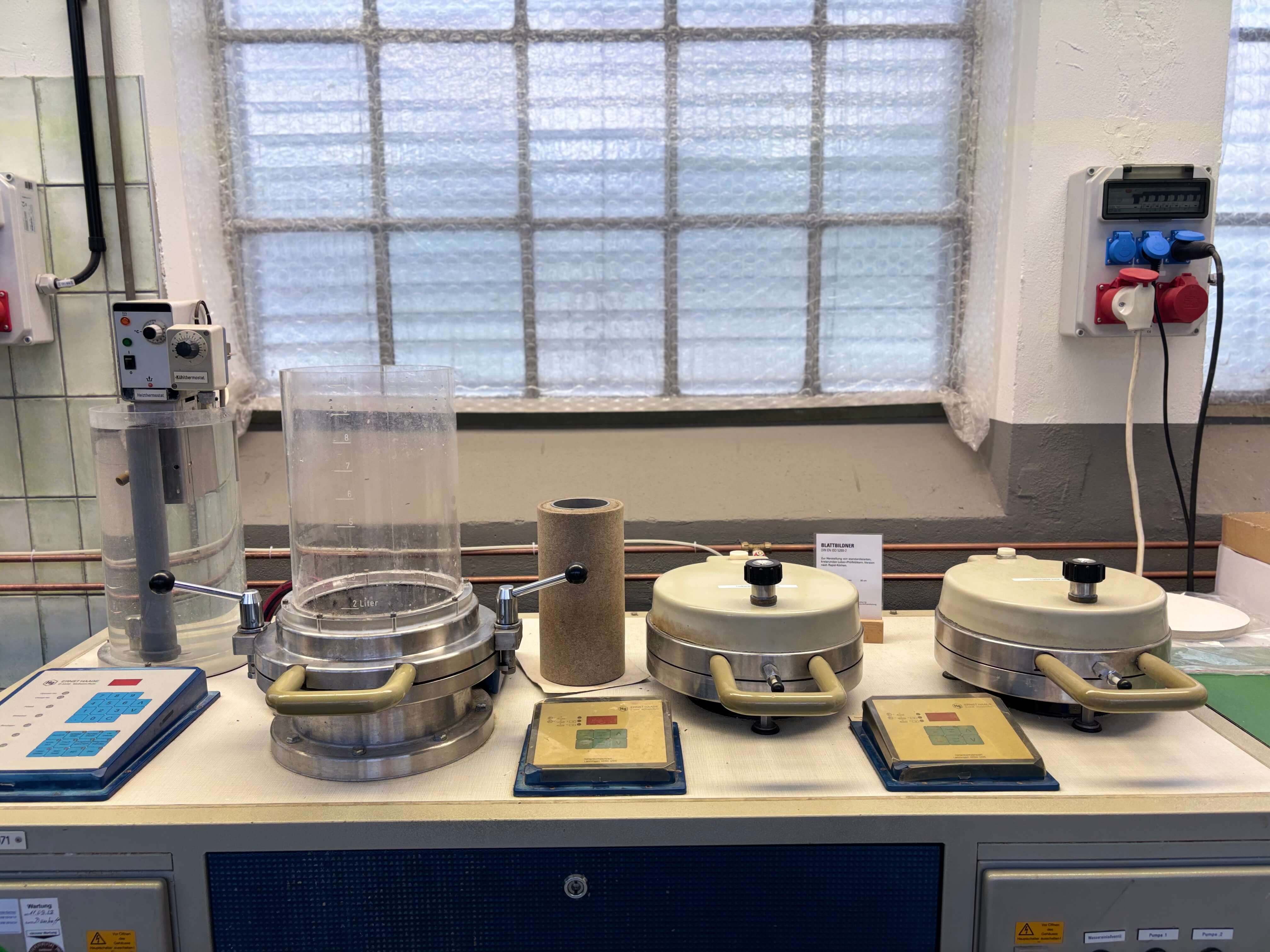
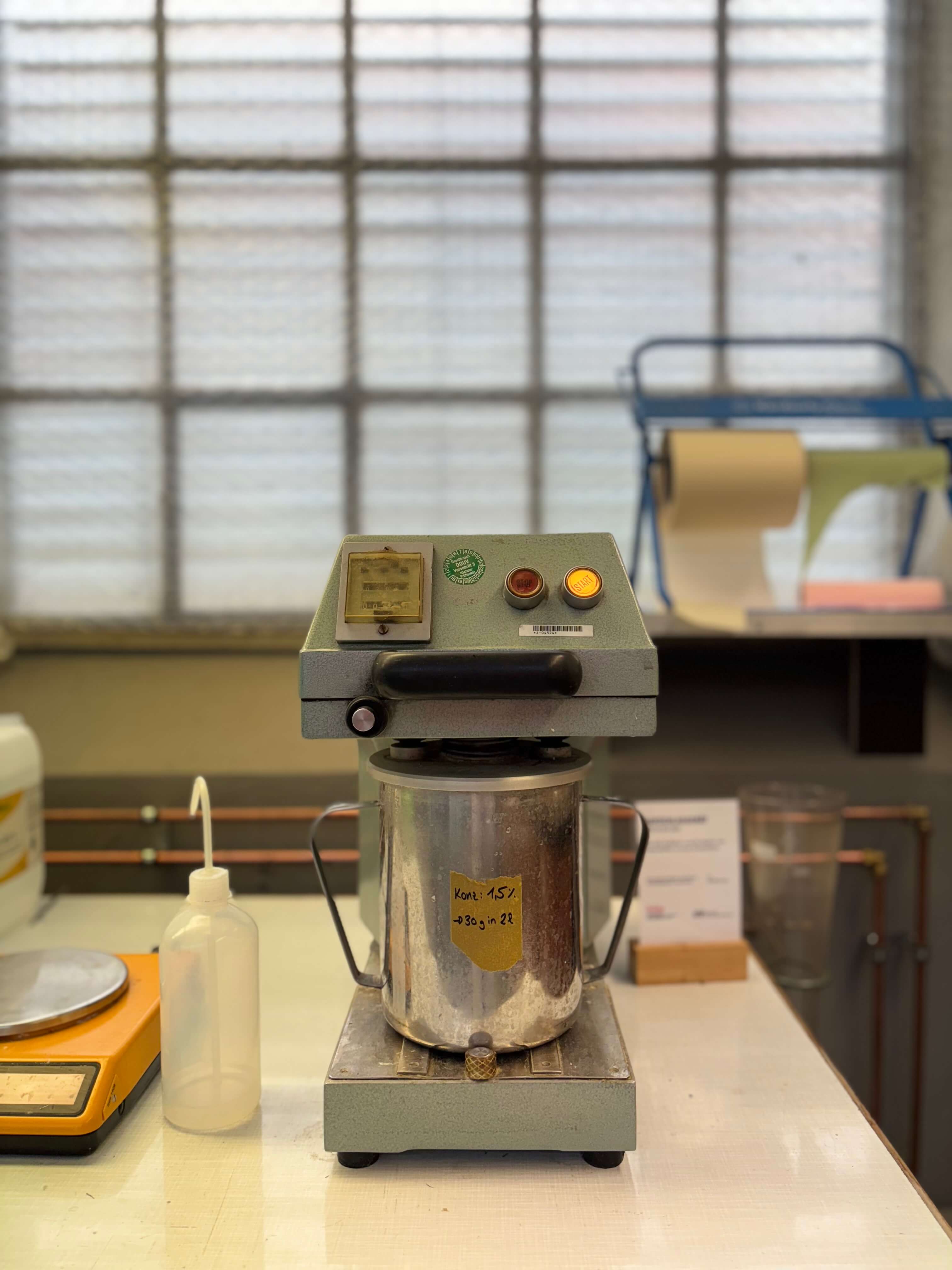
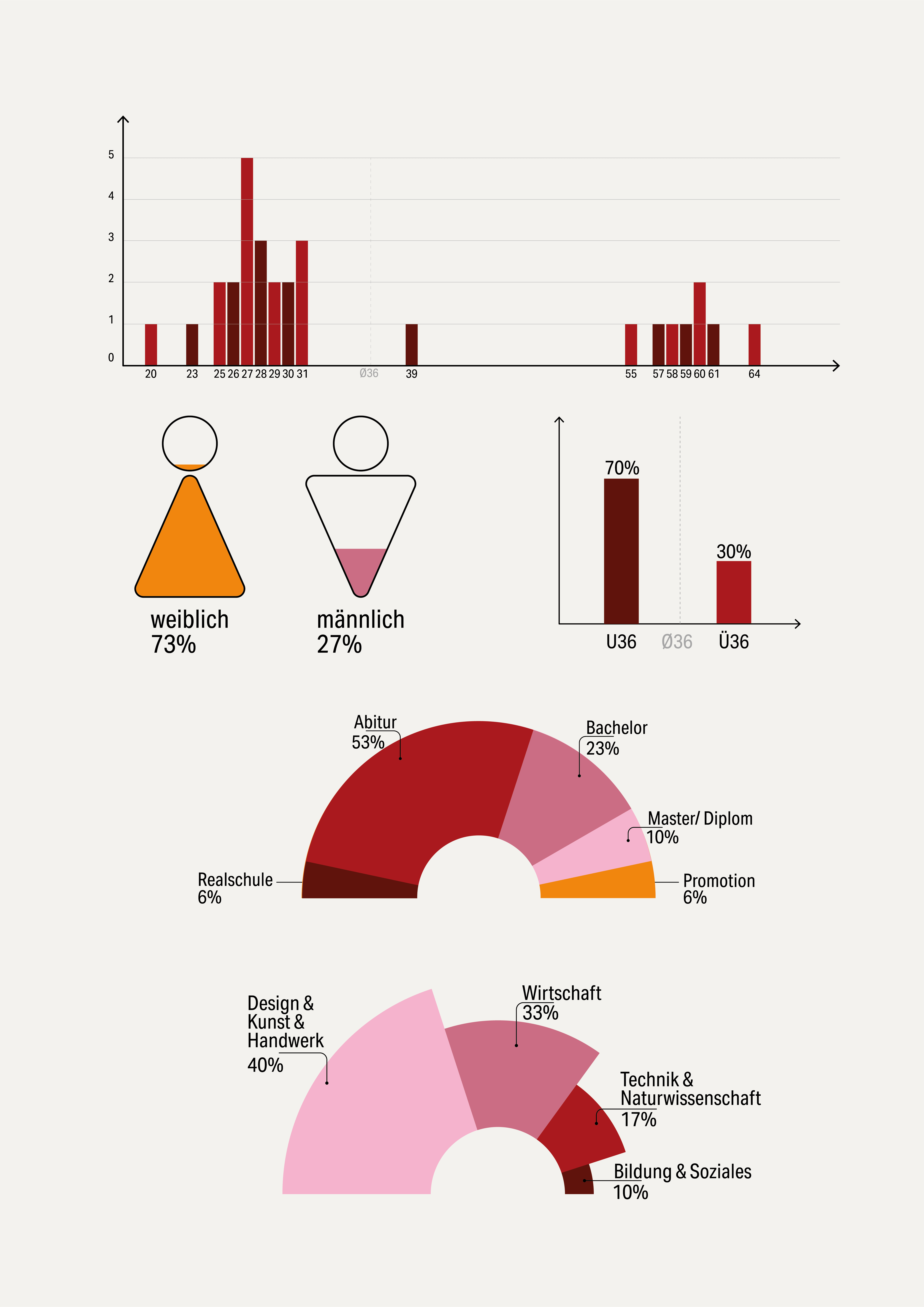
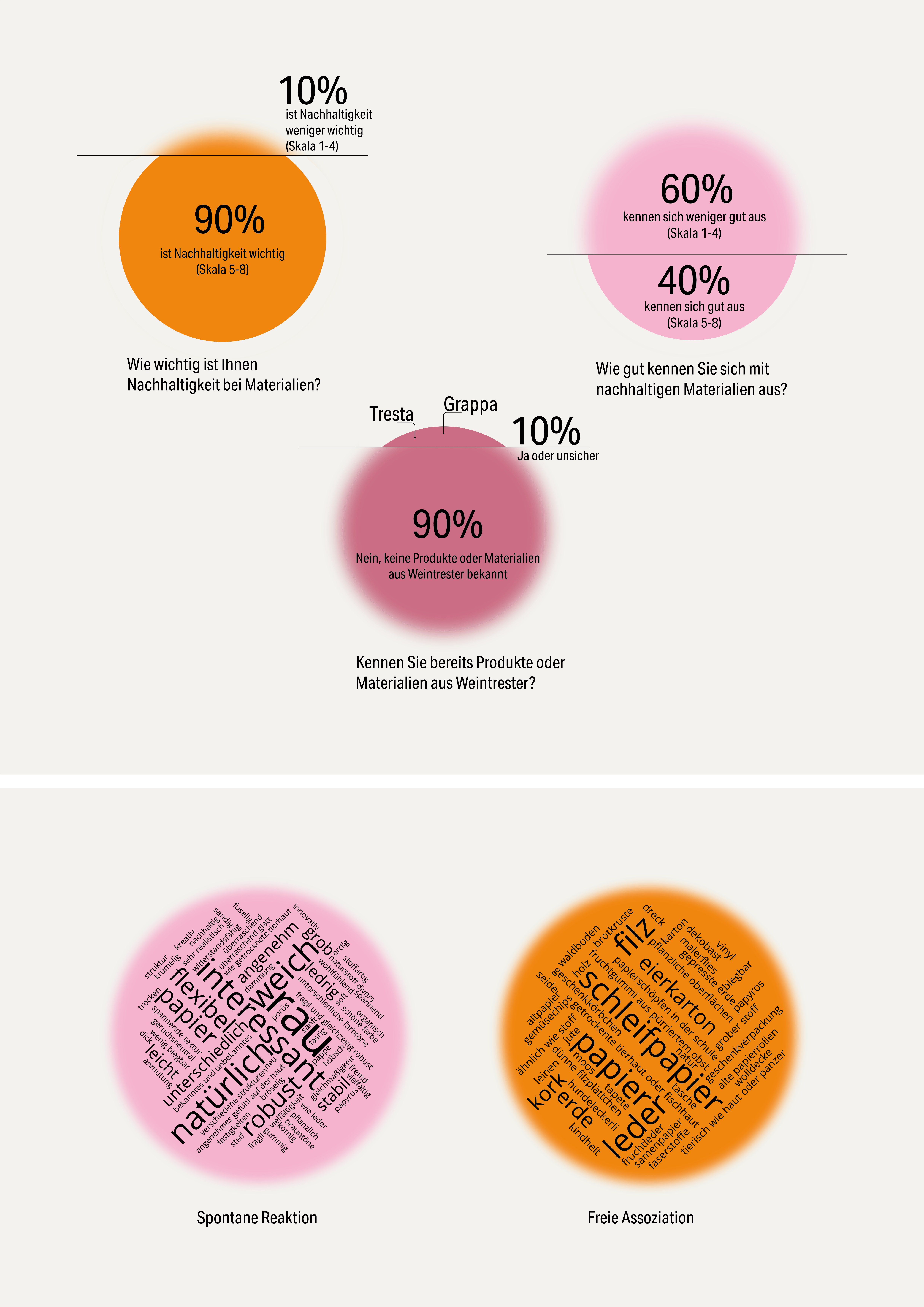
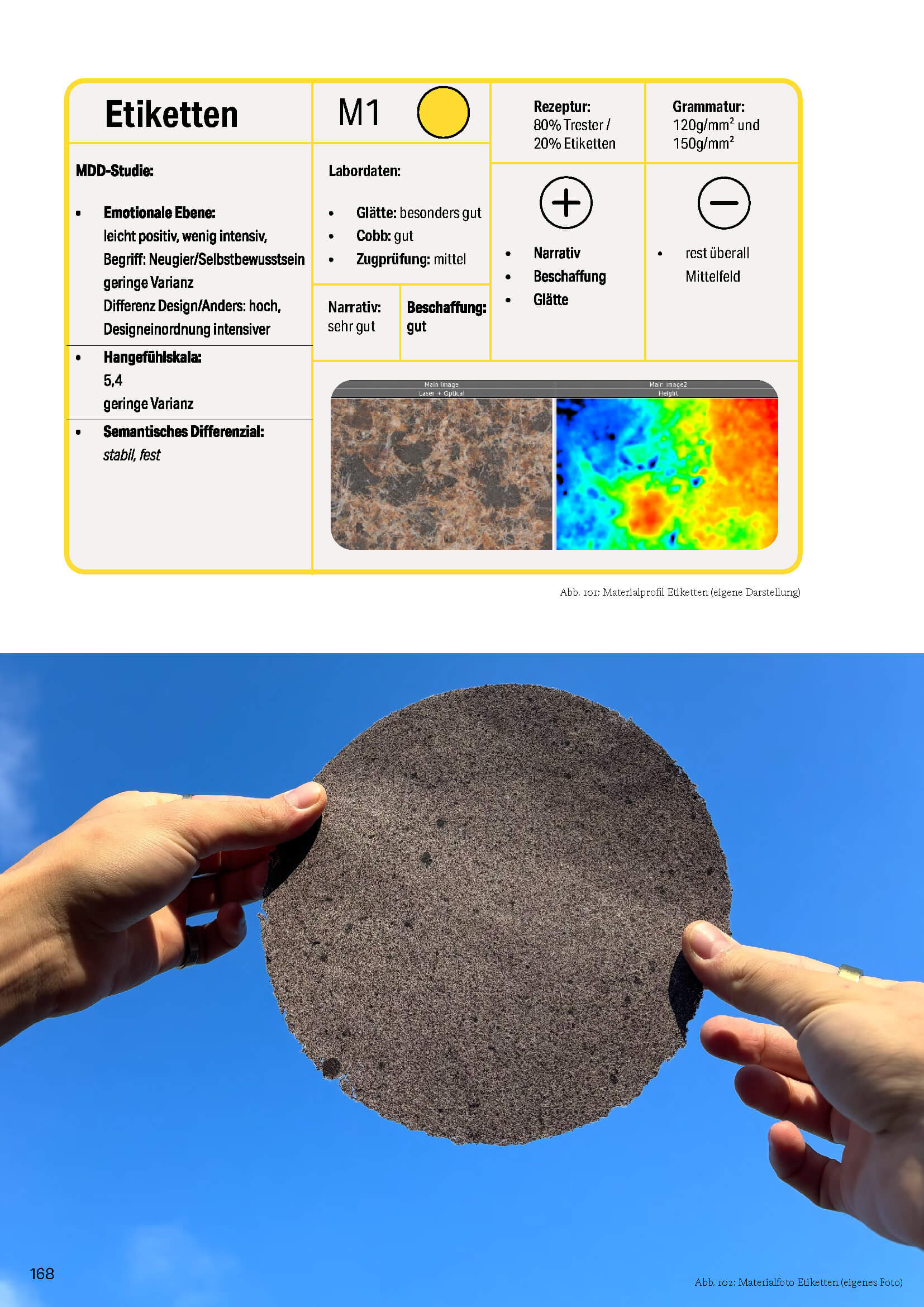
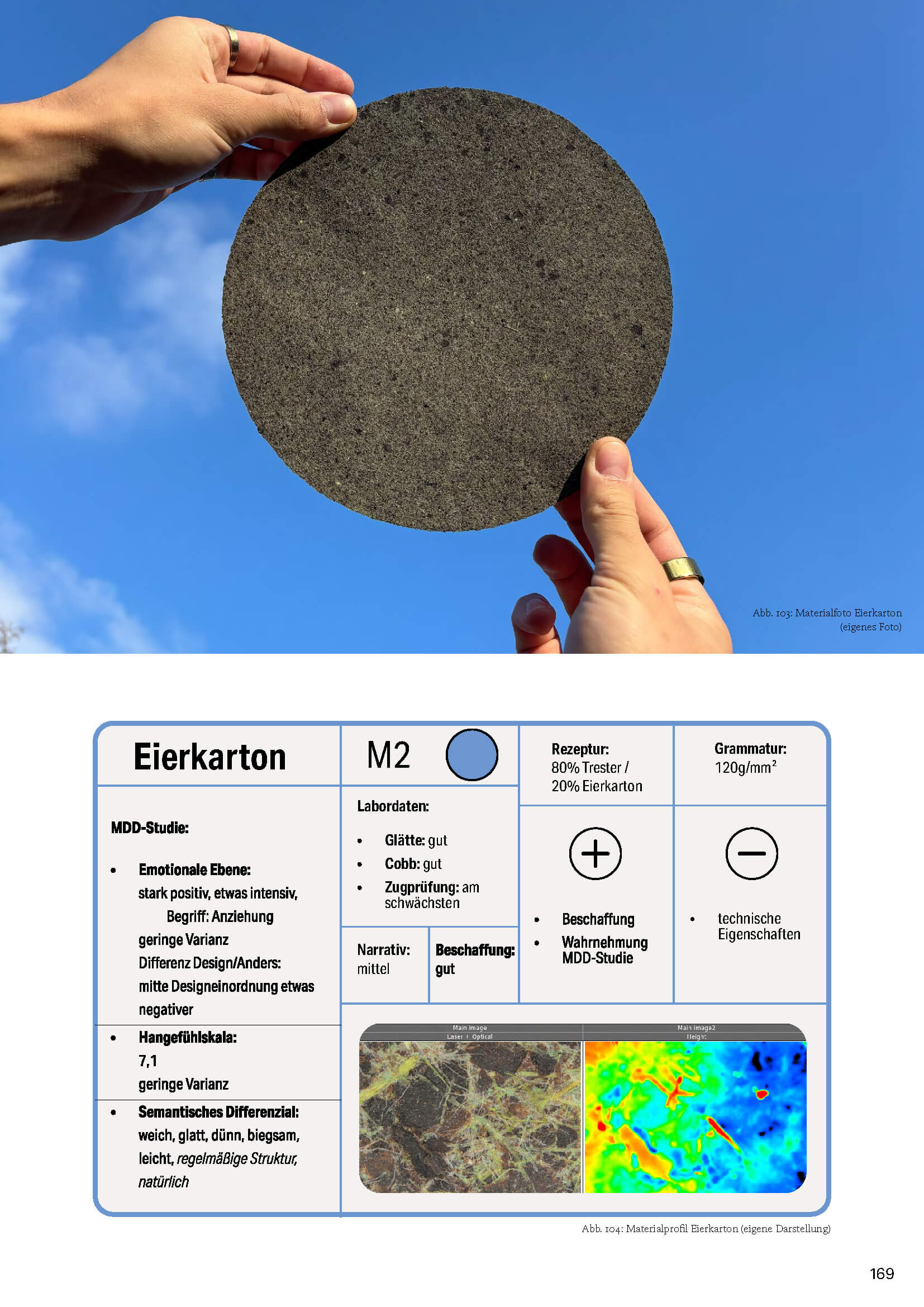
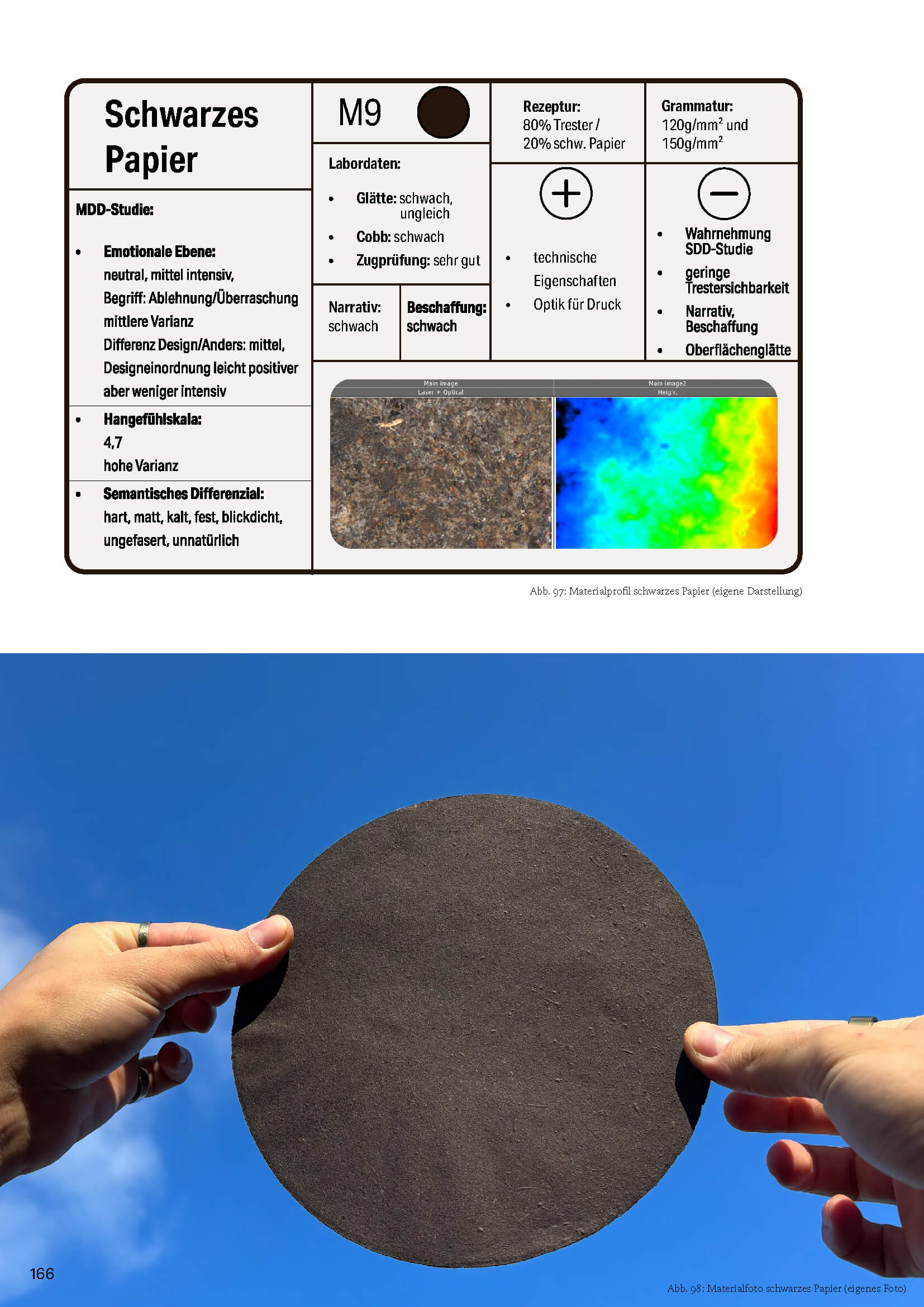
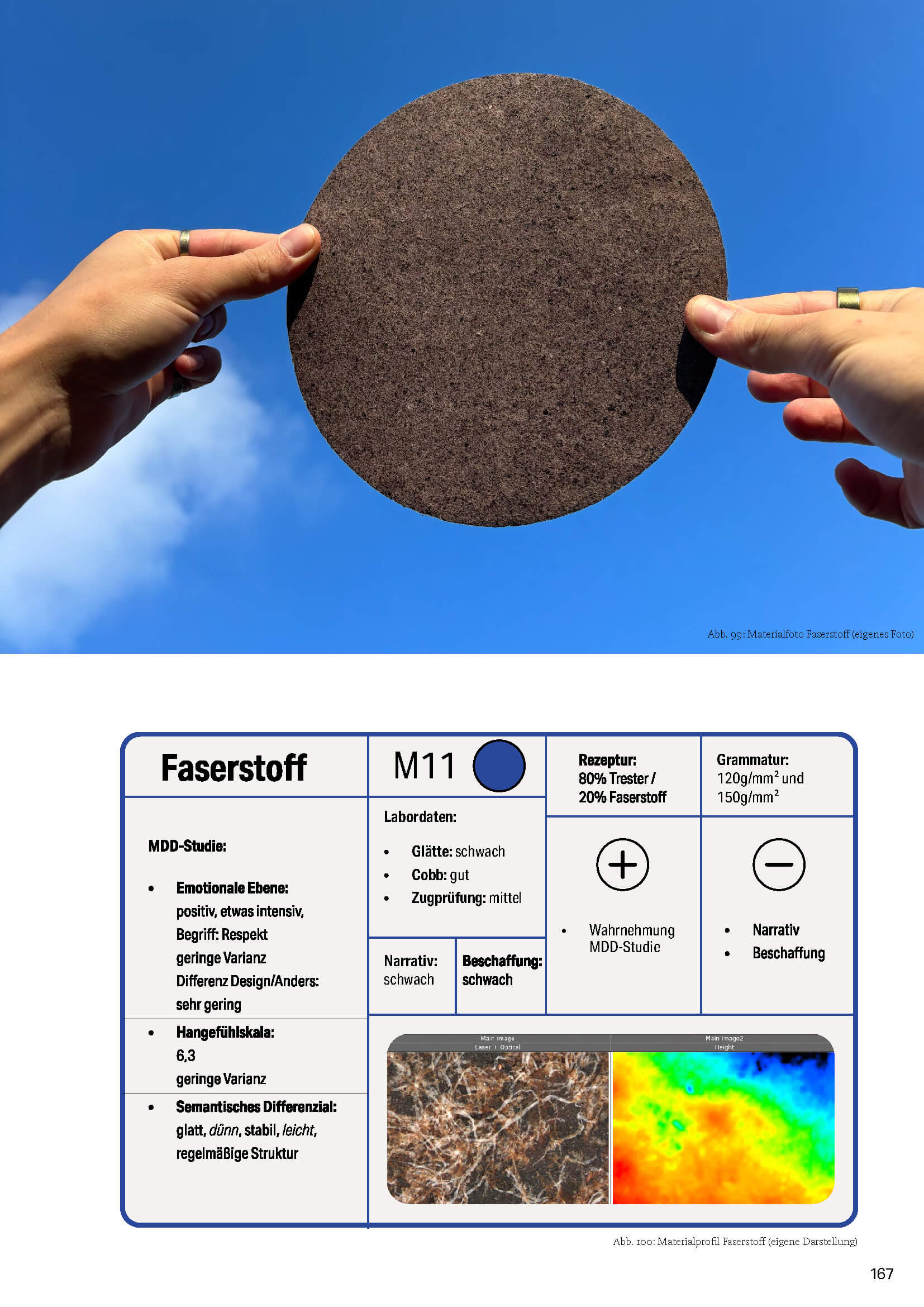
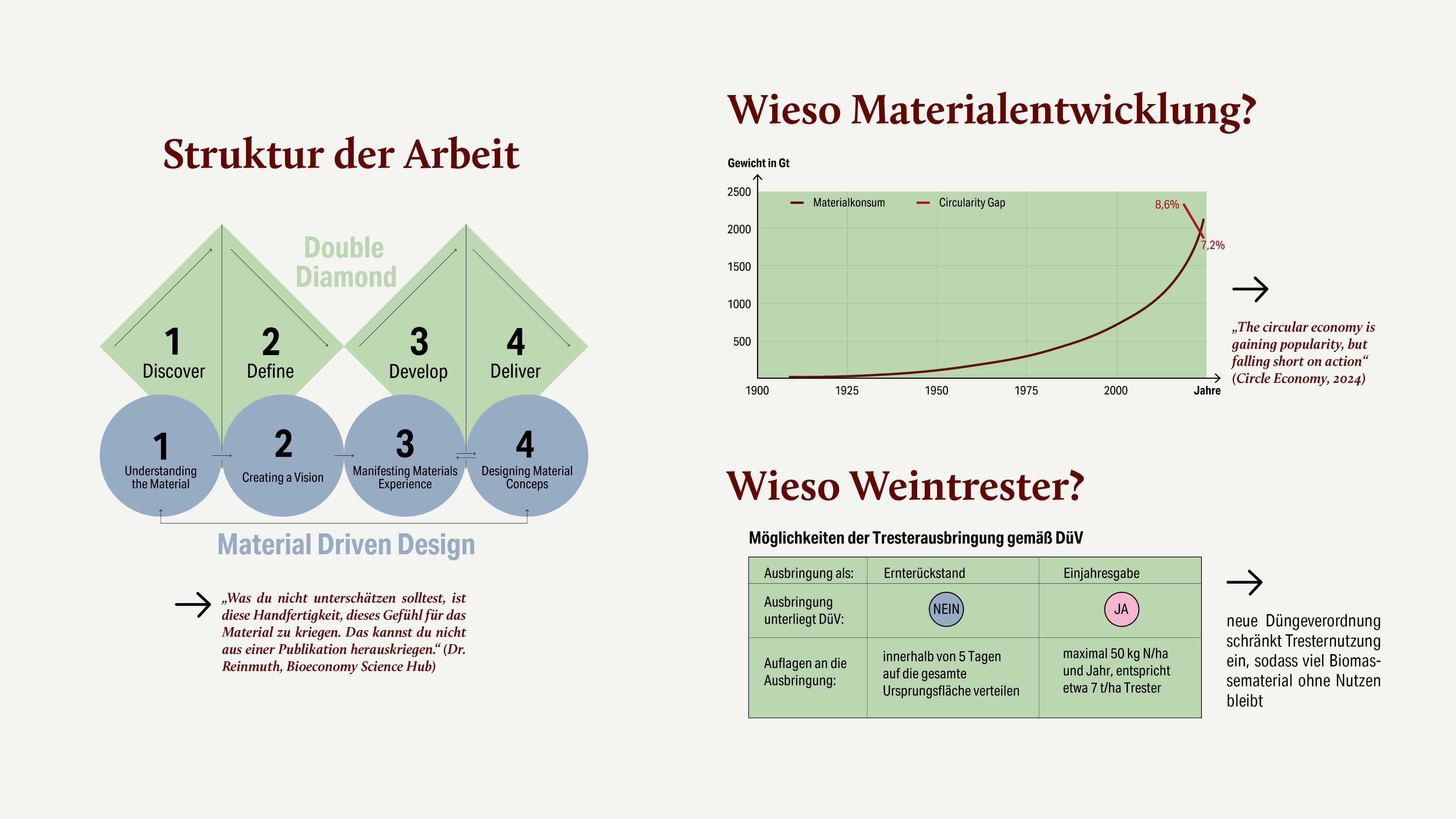
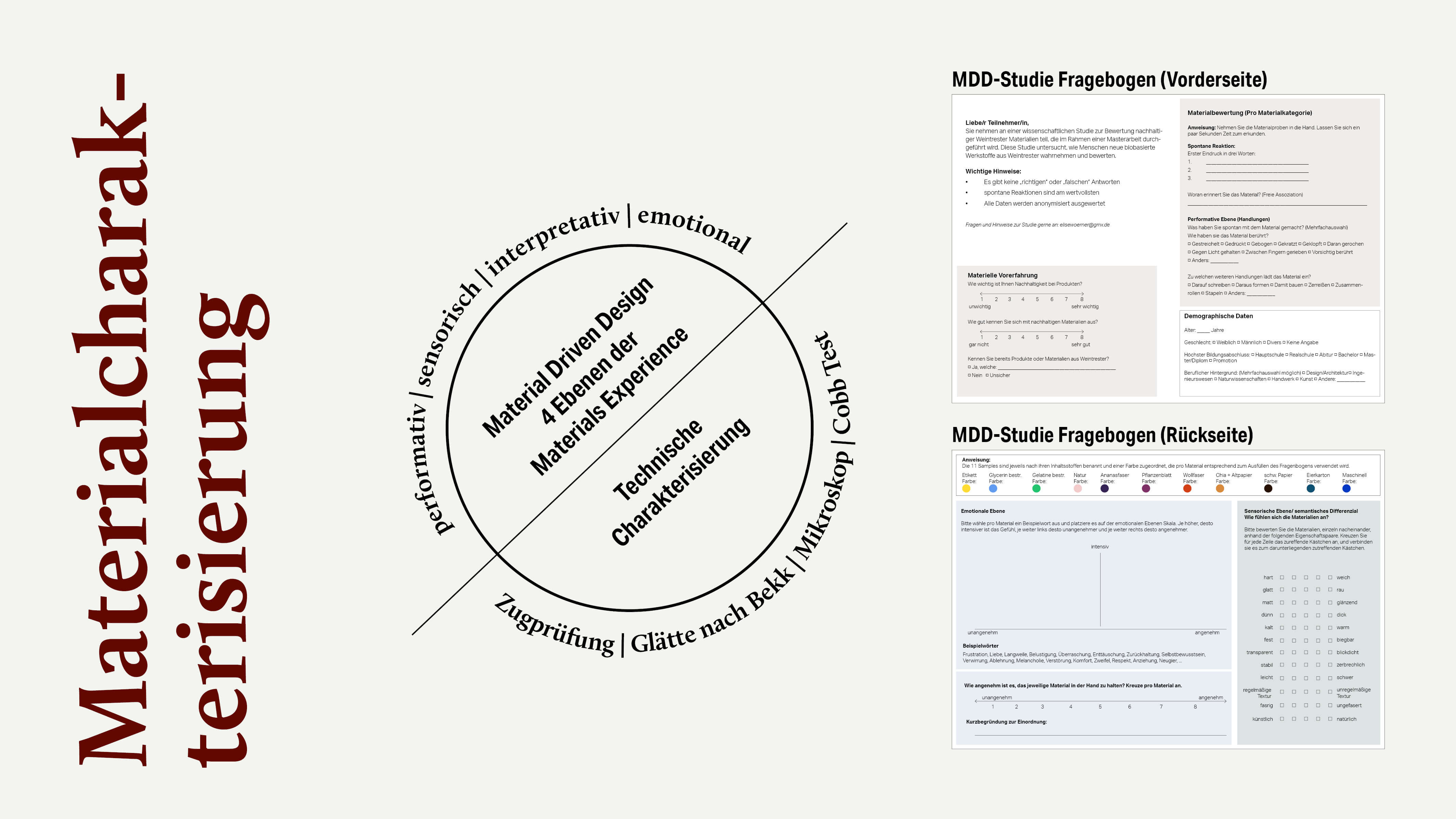
During the development phase, the pomace paper was produced in a paper mill and tested in the laboratory for its technical properties. At the same time, the design perspective brought an often overlooked aspect to the foreground: the effect of the material on its users. This so-called materials experience was examined in a user study based on the Material Driven Design approach, with the aim of not only comparing different material recipes but also gaining indications of which application fields and target groups the material could serve particularly well.